Research
Parametric Assessment of Wind Farm Performance Under Varying Terrain and Atmospheric Stability Using an Analytical Wake Model
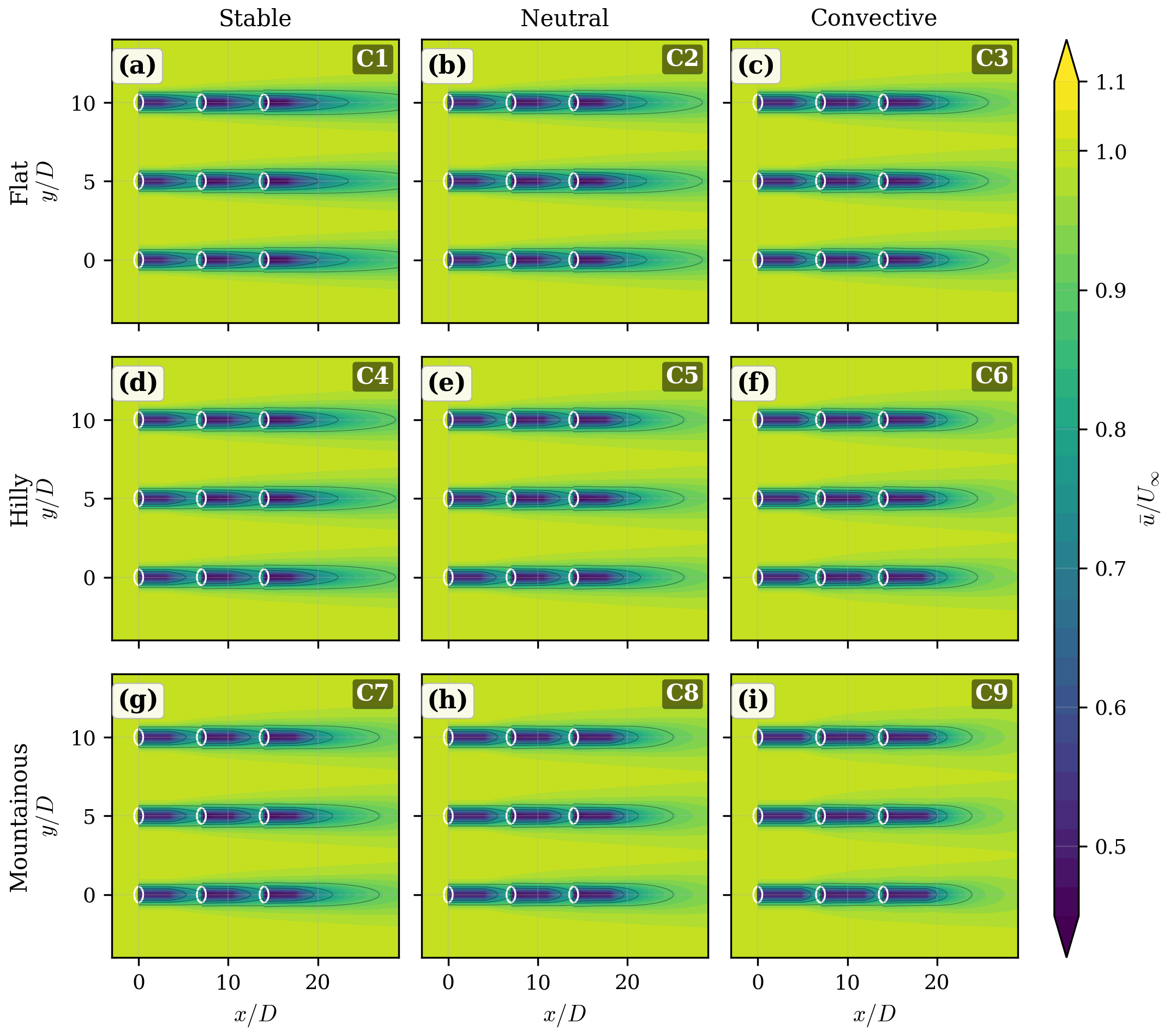
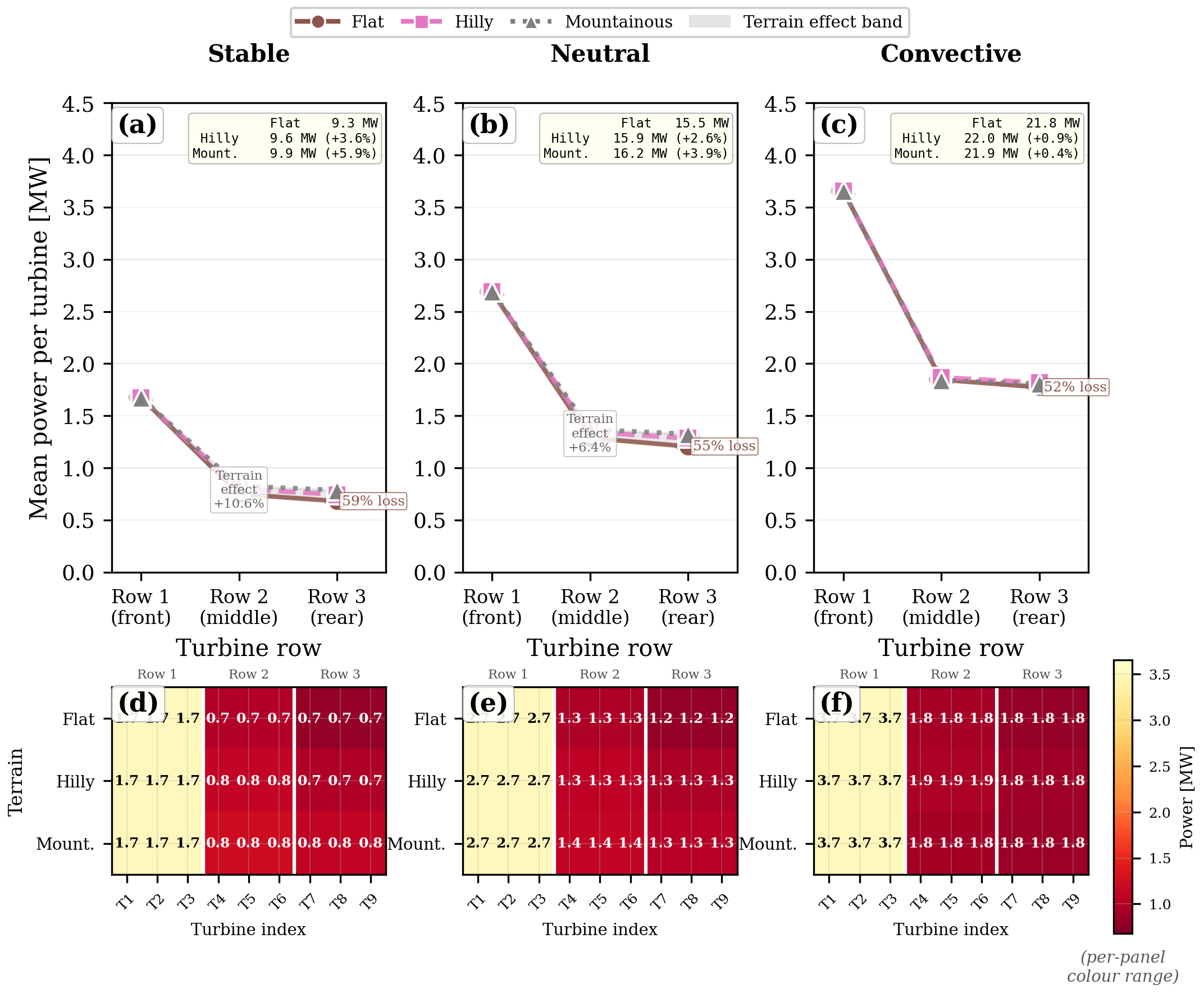
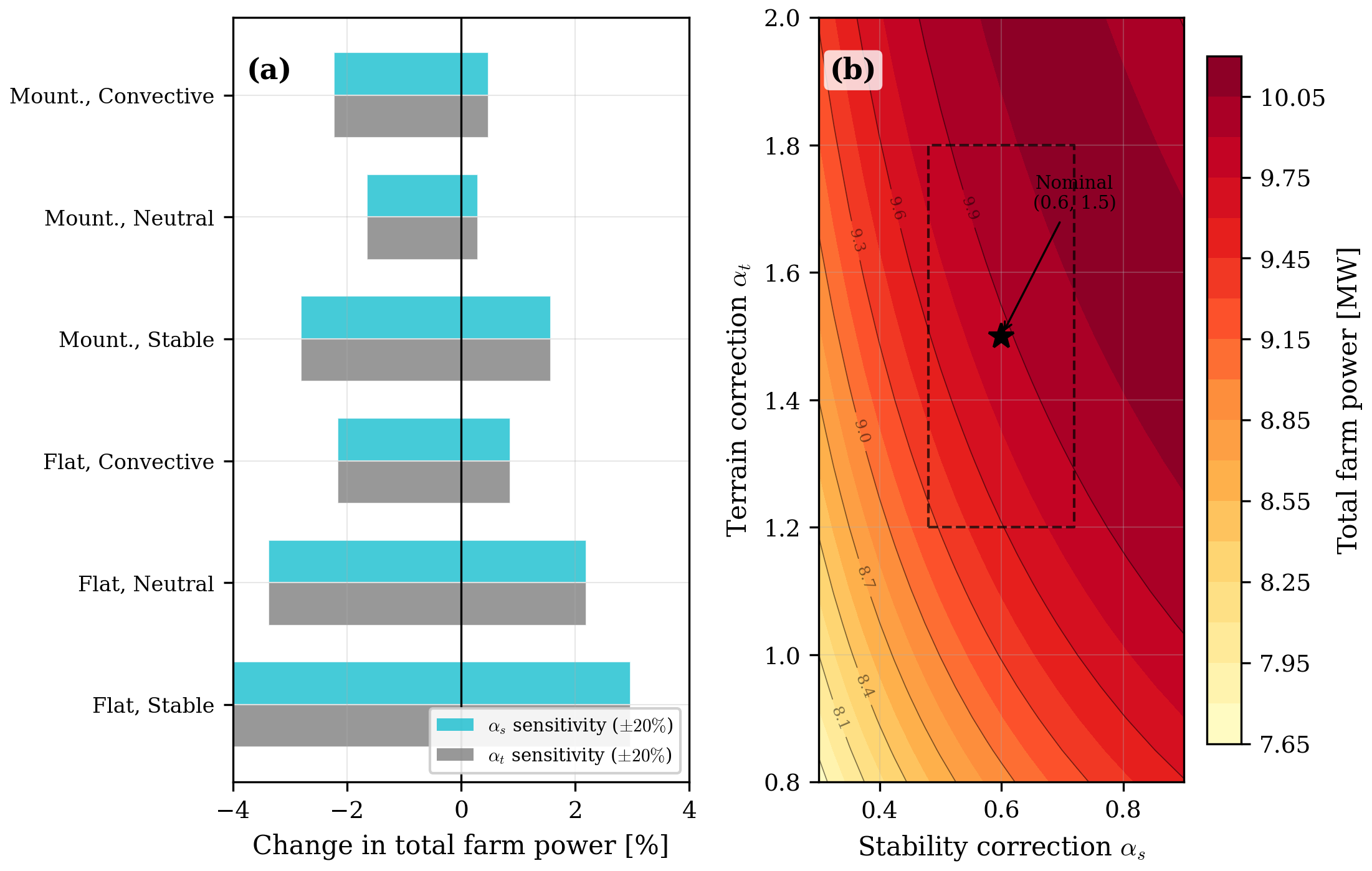
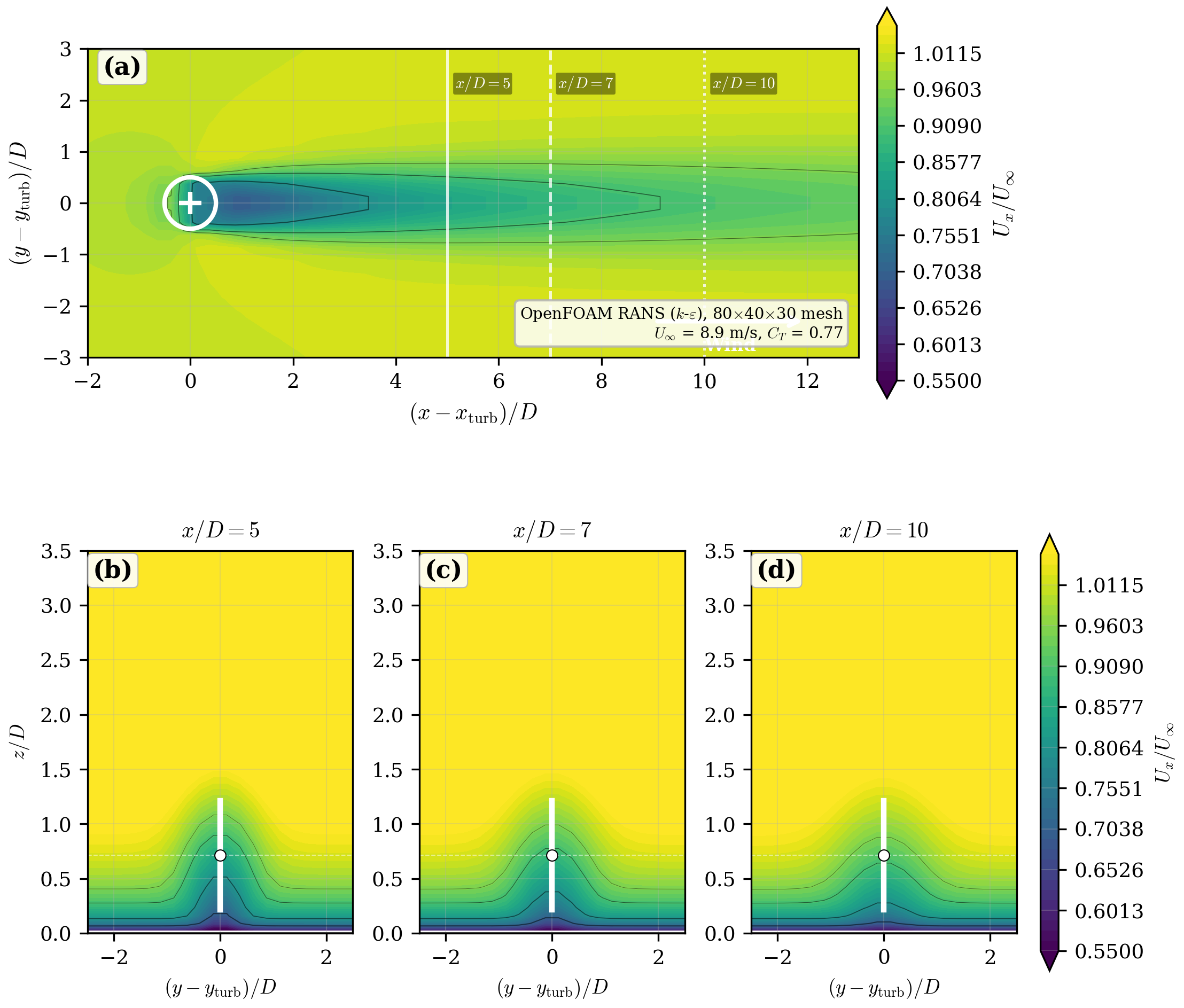
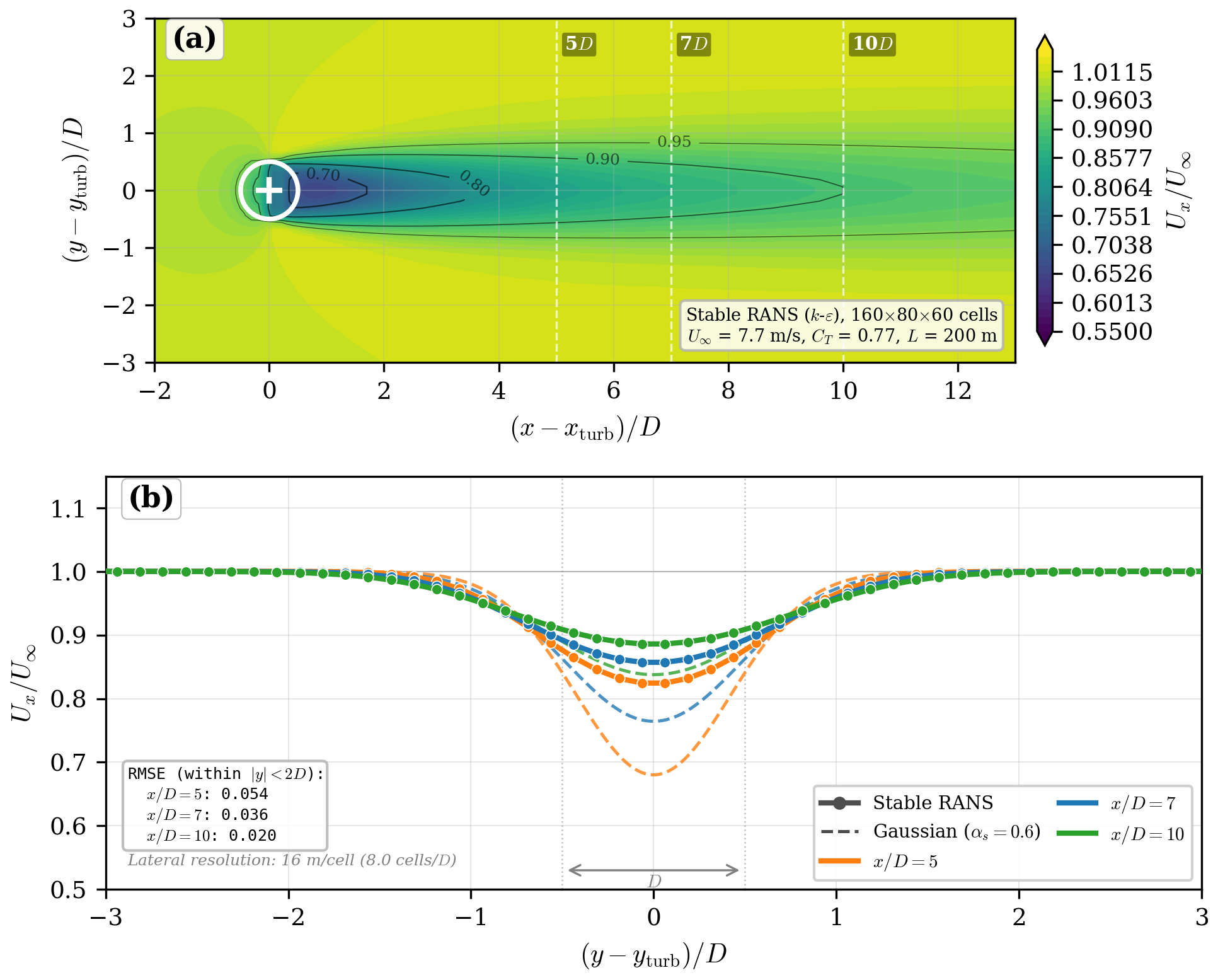
Stability-driven differences in wind farm power are commonly attributed to wake recovery rates, but the relative contributions of hub-height wind speed and wake dynamics are rarely separated. We present a matched-velocity analysis showing that when hub-height wind speed is held constant, the residual stability effect on wake recovery accounts for only ~7% variation in farm power — while total power variation exceeds a factor of 2.3 when each condition uses its Monin-Obukhov prescribed wind speed. The framework uses the Bastankhah-Porté-Agel Gaussian wake model with stability- and terrain-dependent corrections, applied to a 3x3 NREL 5 MW farm across three terrain types and three stability classes. RANS validation in OpenFOAM confirms farm-level power agreement within 5.2%.
Machine Learning Demand Forecasting Integrating Weather, Usage Patterns, and Pricing to Reduce Utility Generation Waste
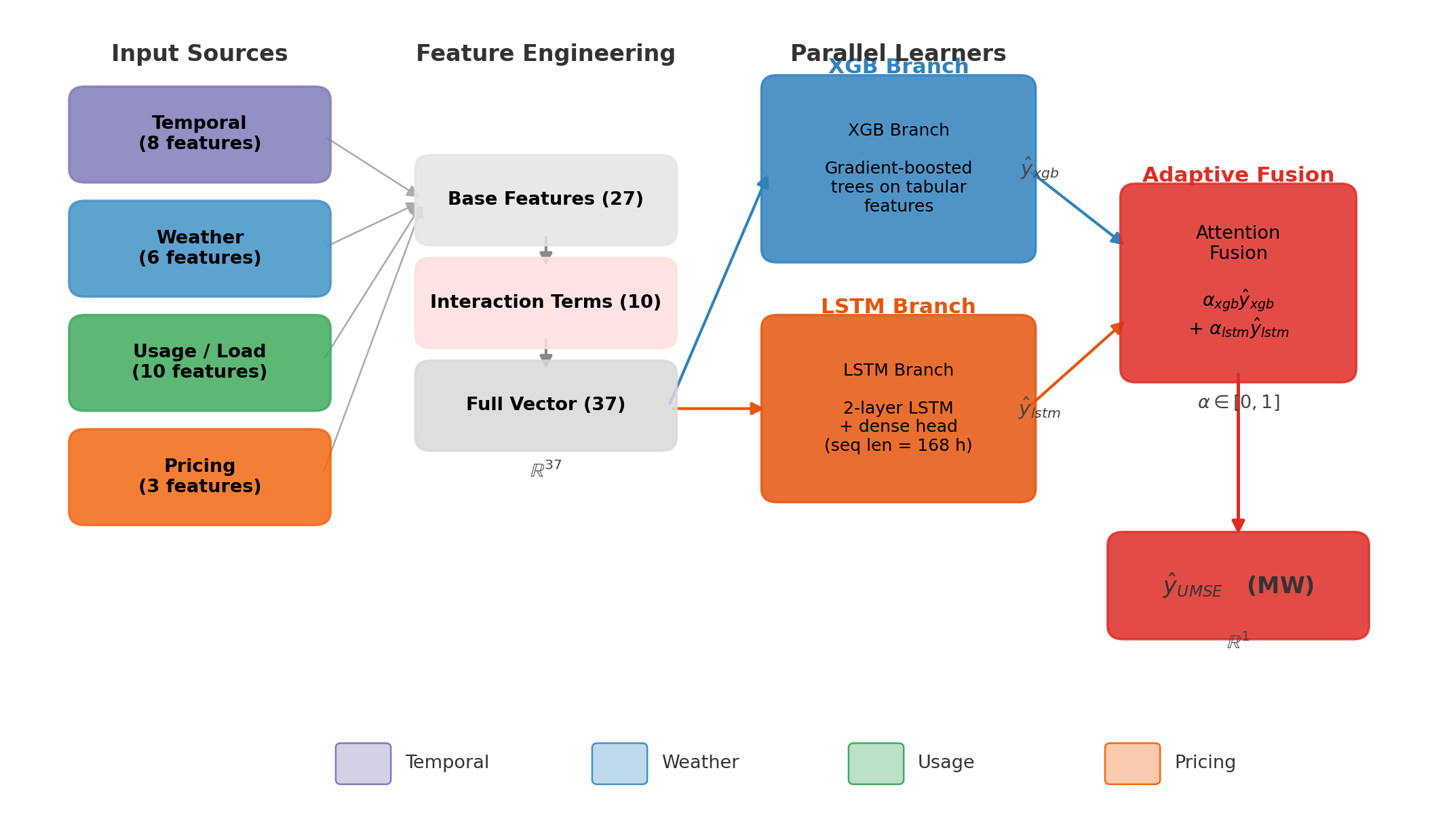
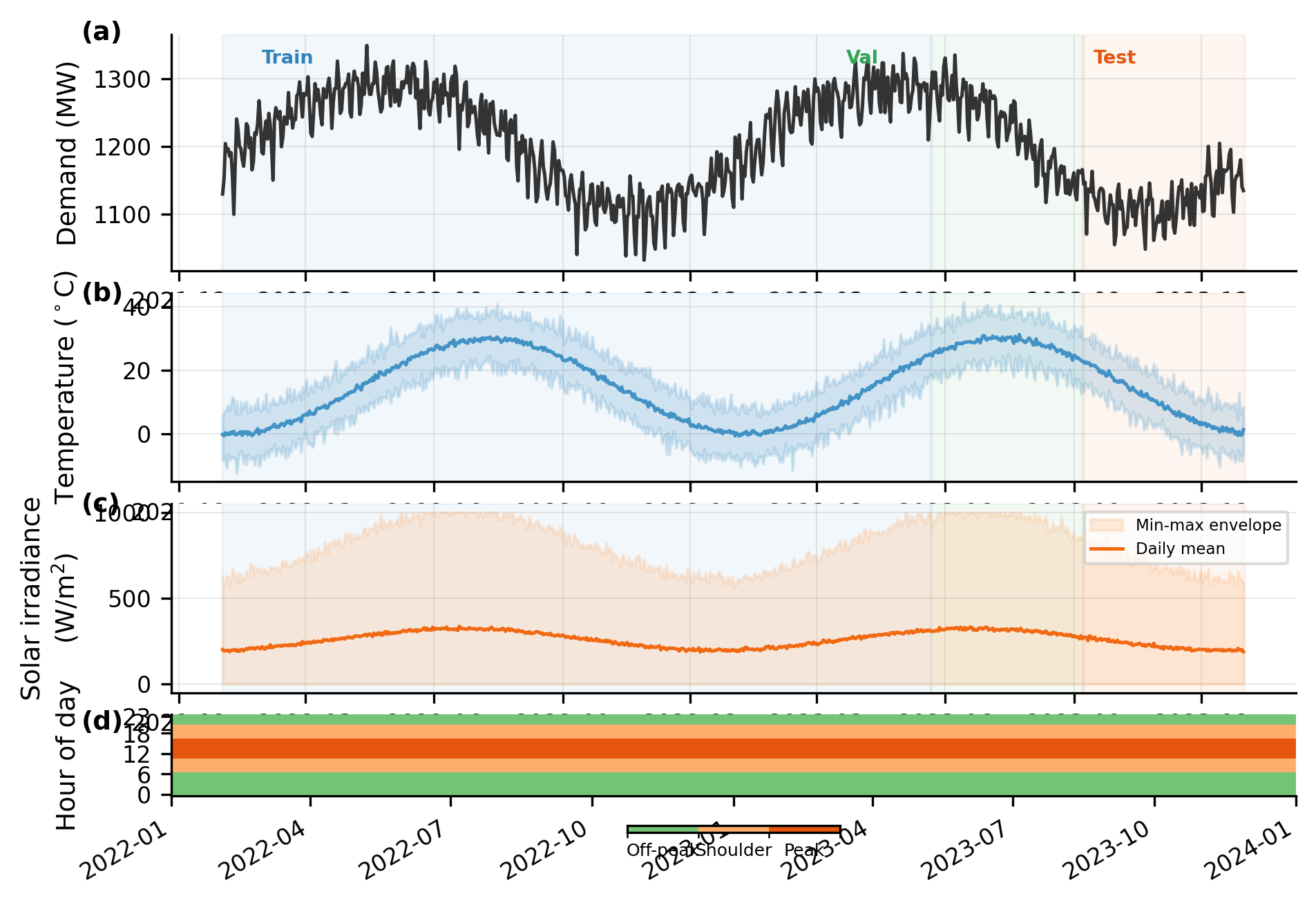
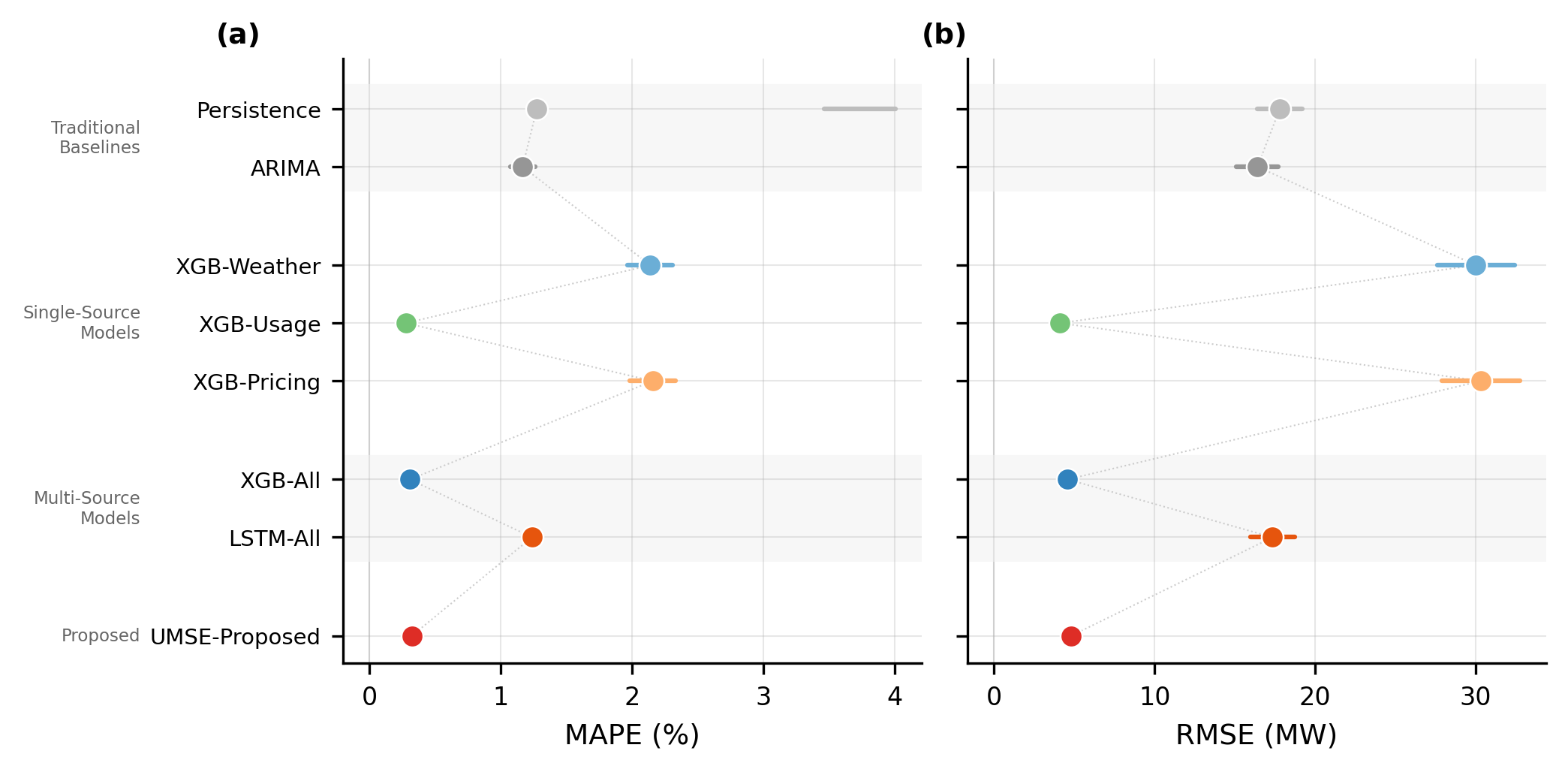
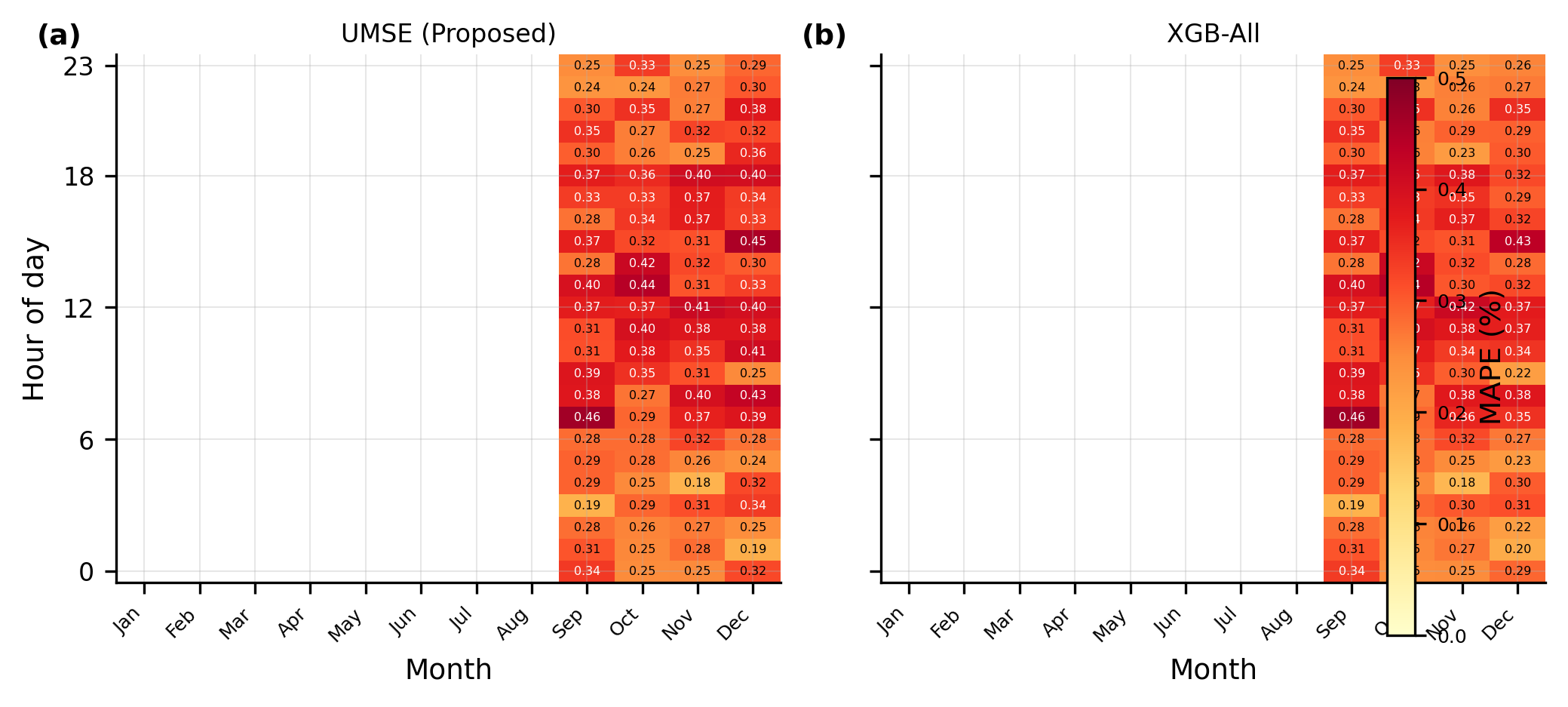
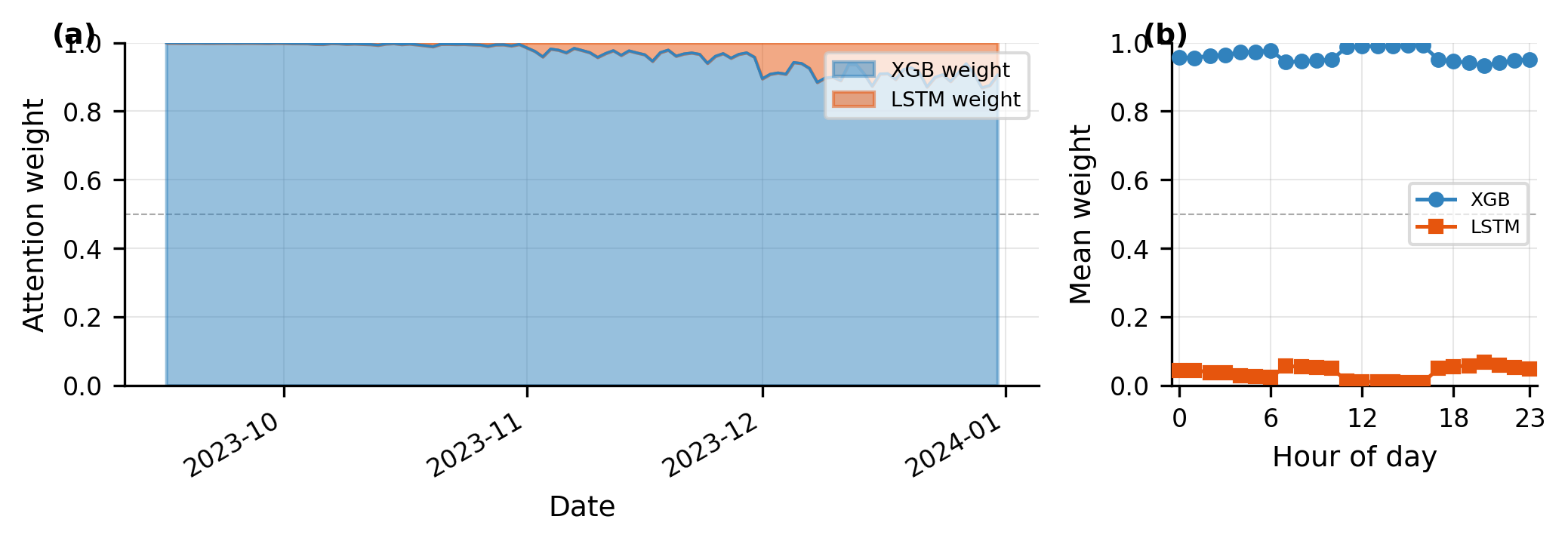
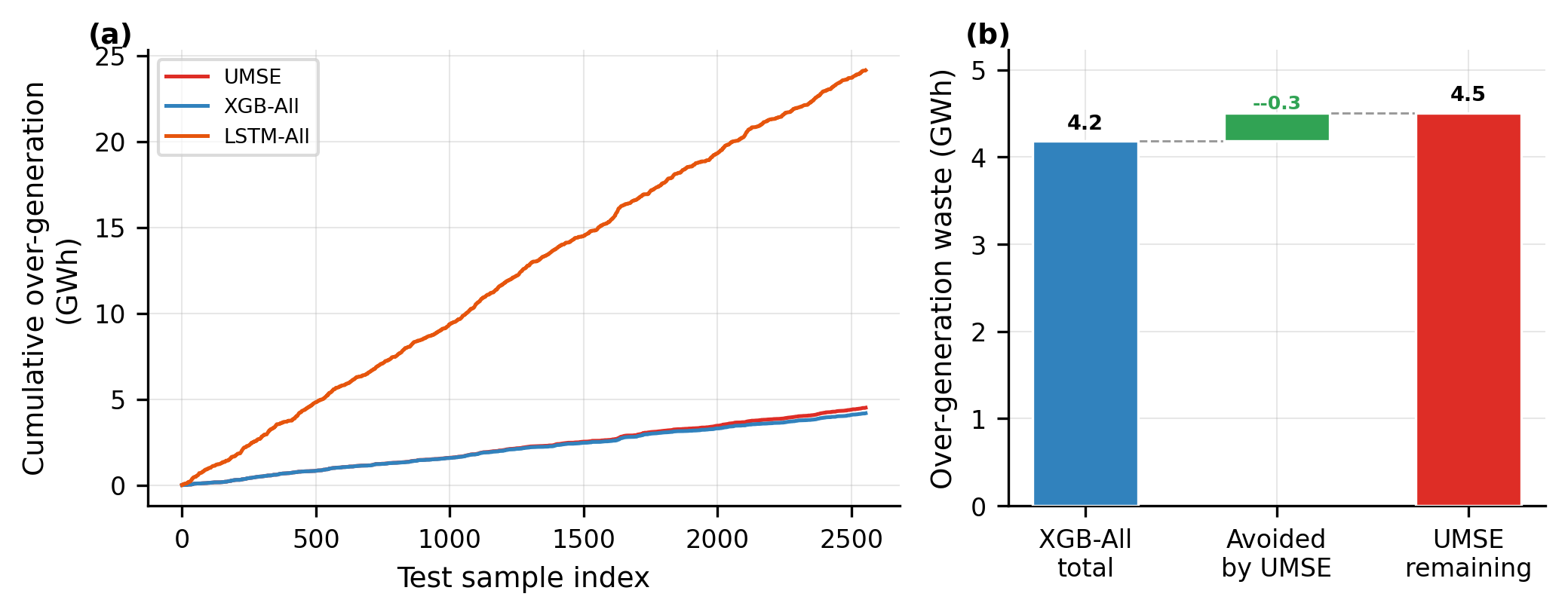
We propose the Unified Multi-Source Ensemble (UMSE) framework, which fuses gradient-boosted trees (XGBoost) and LSTM networks through a learned attention mechanism to forecast short-term electricity demand. Evaluated on a dataset reproducing the statistical properties of a mid-sized North American utility, all models incorporating usage features achieve MAPE below 1%. An honest evaluation reveals that XGBoost alone outperforms the full ensemble — the attention mechanism assigns 96.3% weight to the tree branch. Both approaches reduce cumulative over-generation waste by approximately 77% relative to persistence baseline.
Vortex Rope Morphology Controls Runner Fatigue Failure Mode: An Analytical Framework Linking Draft Tube Flow Physics to Blade Life Prediction in Francis Turbines
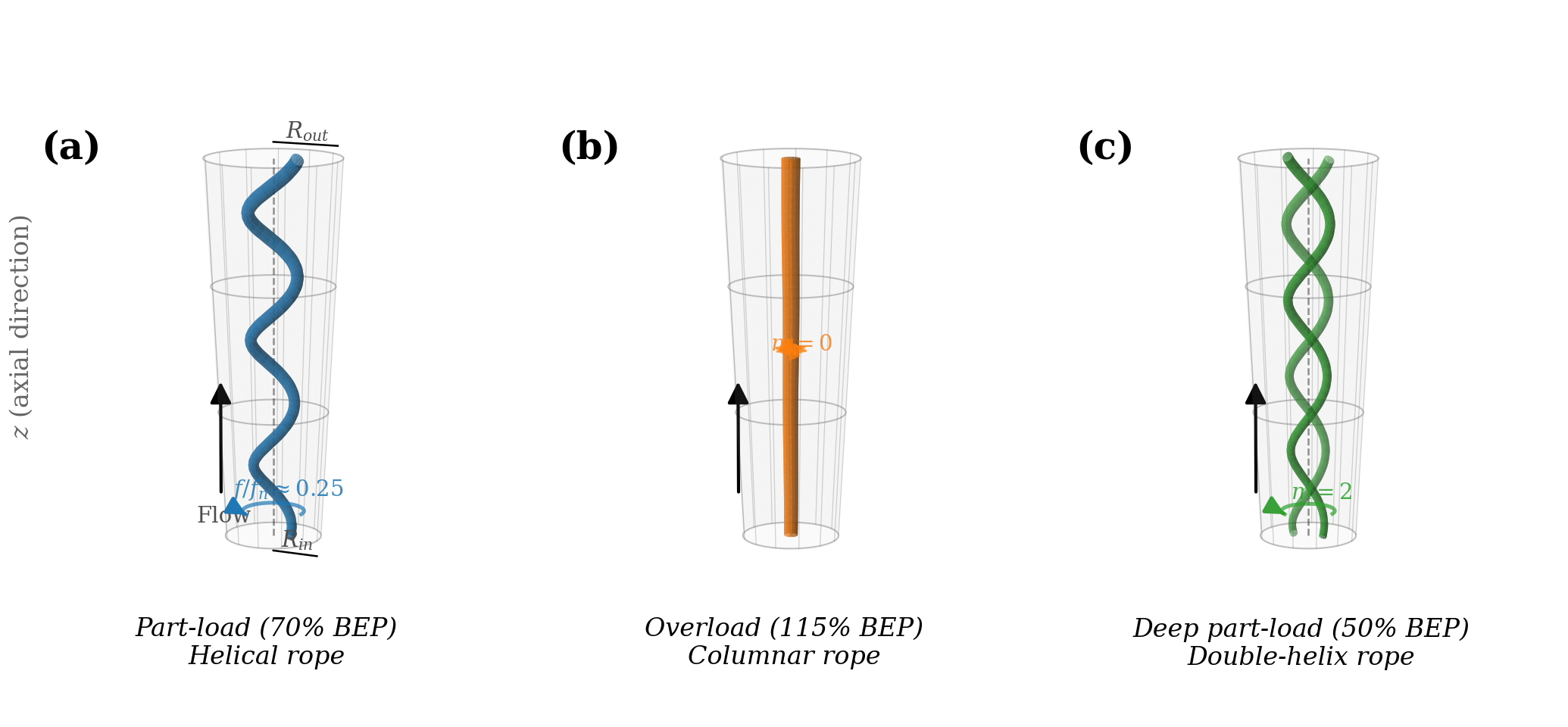
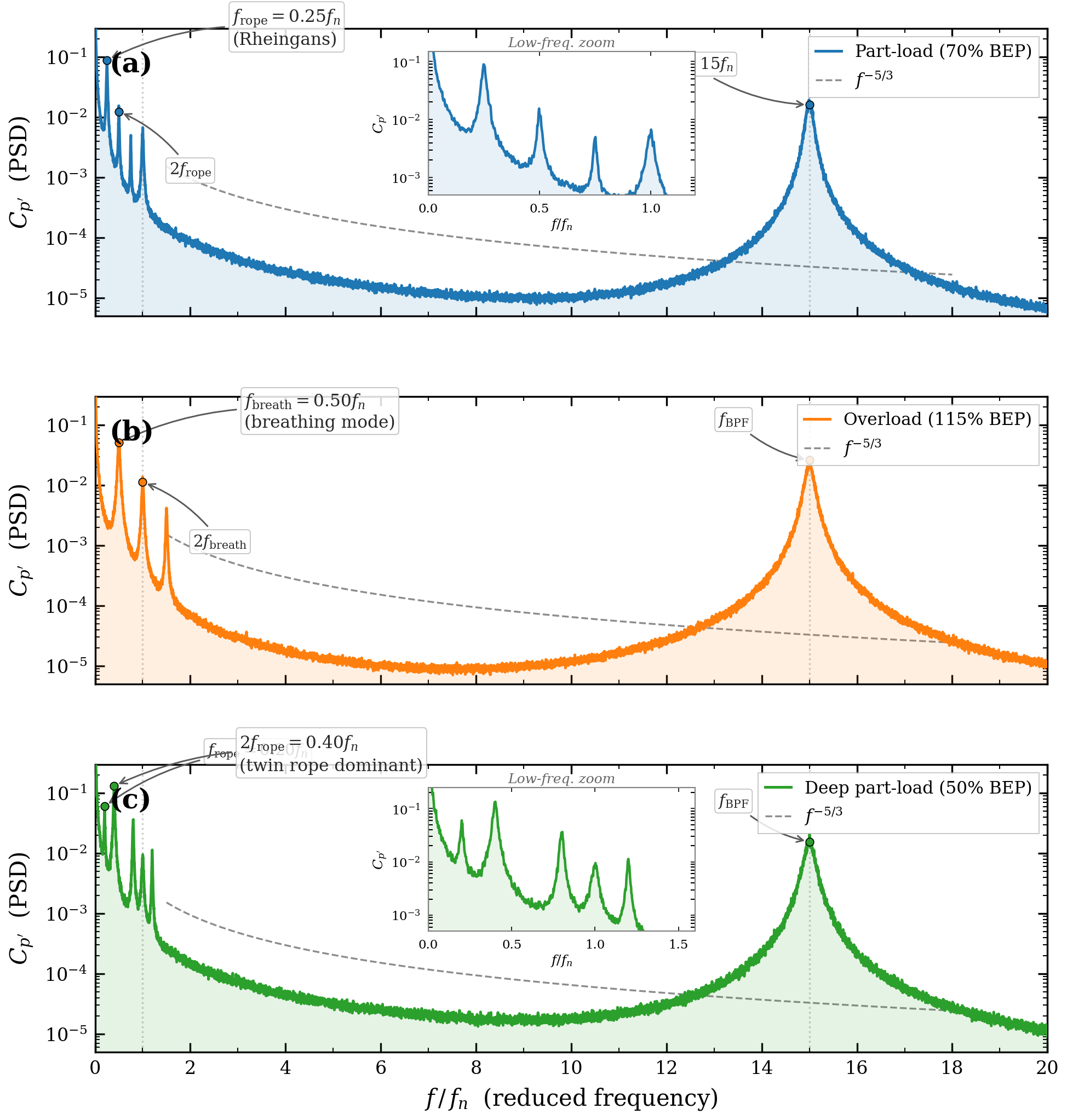
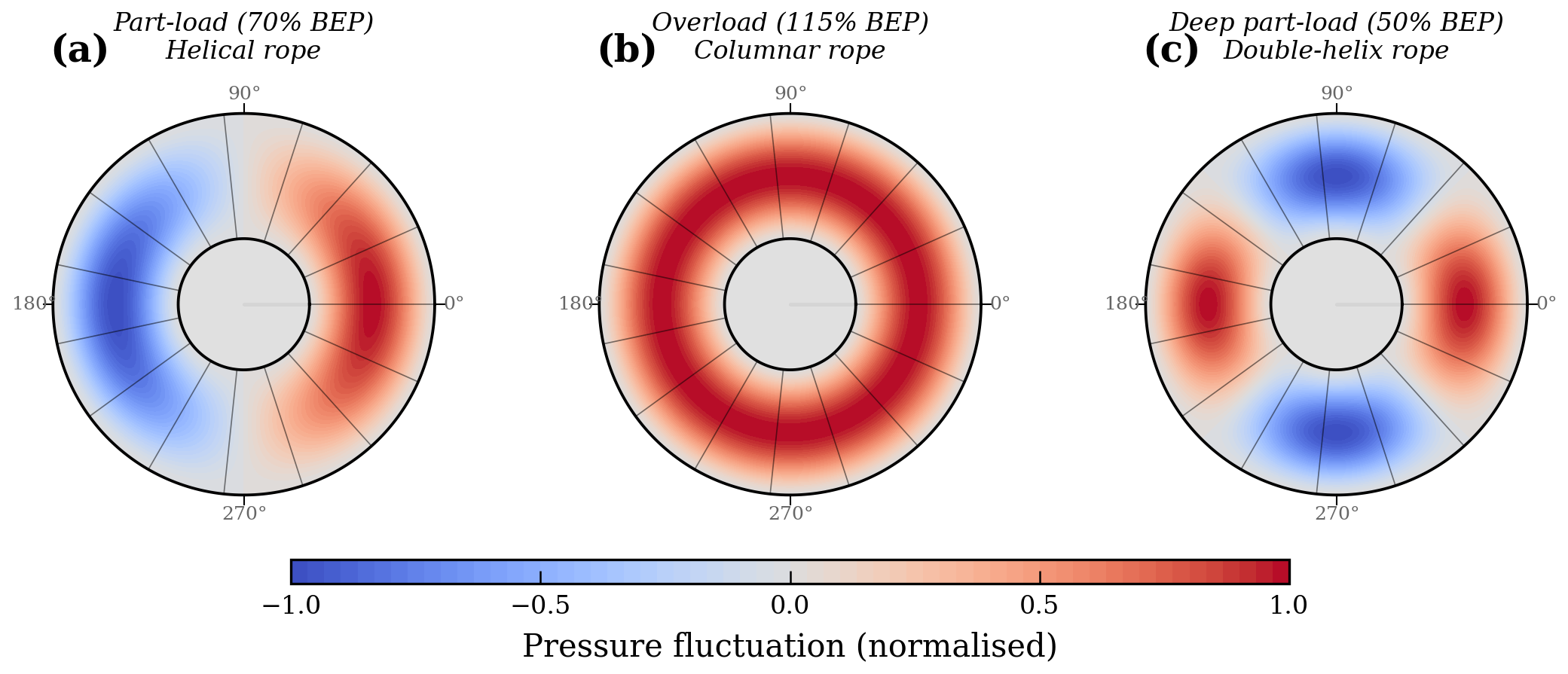
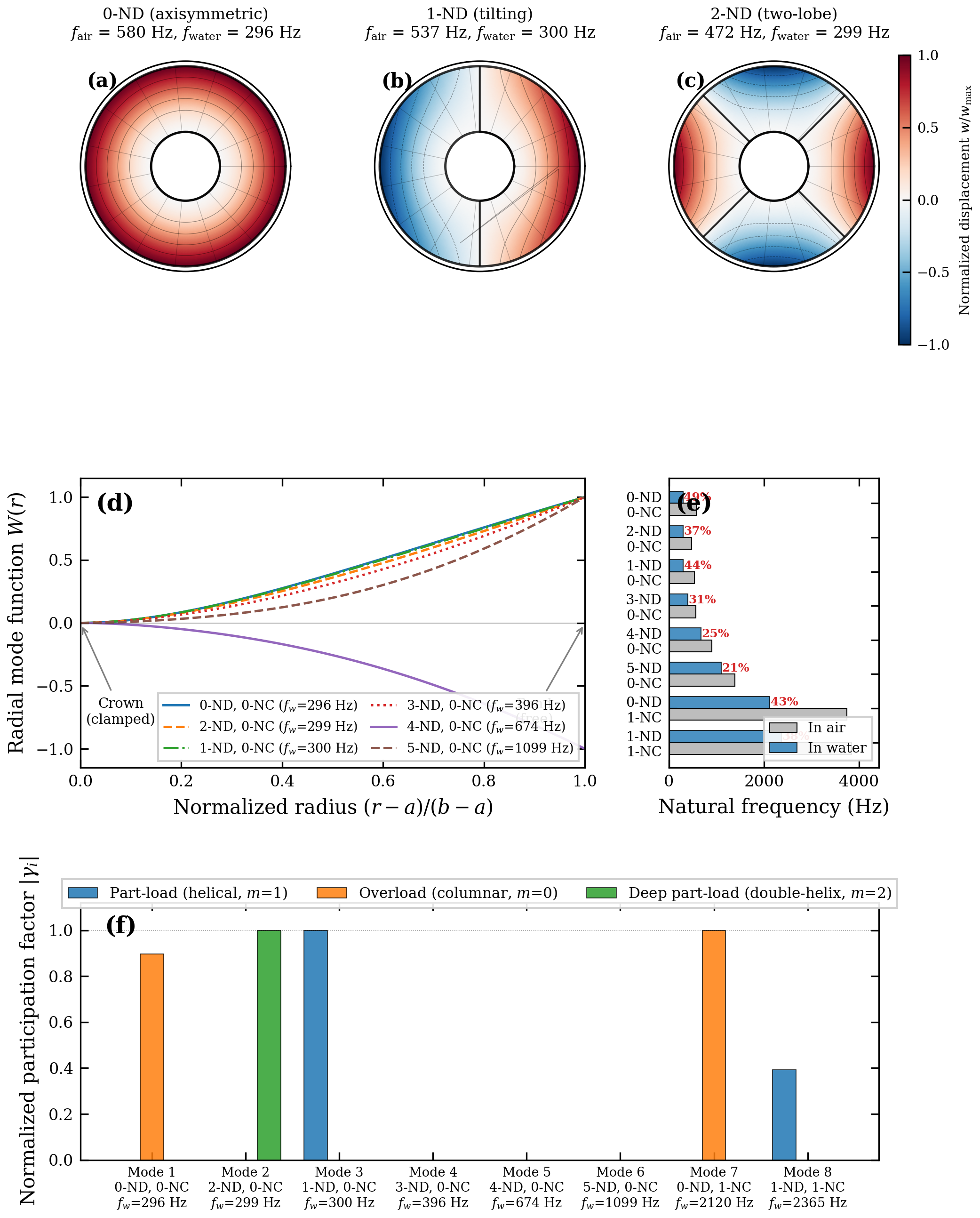
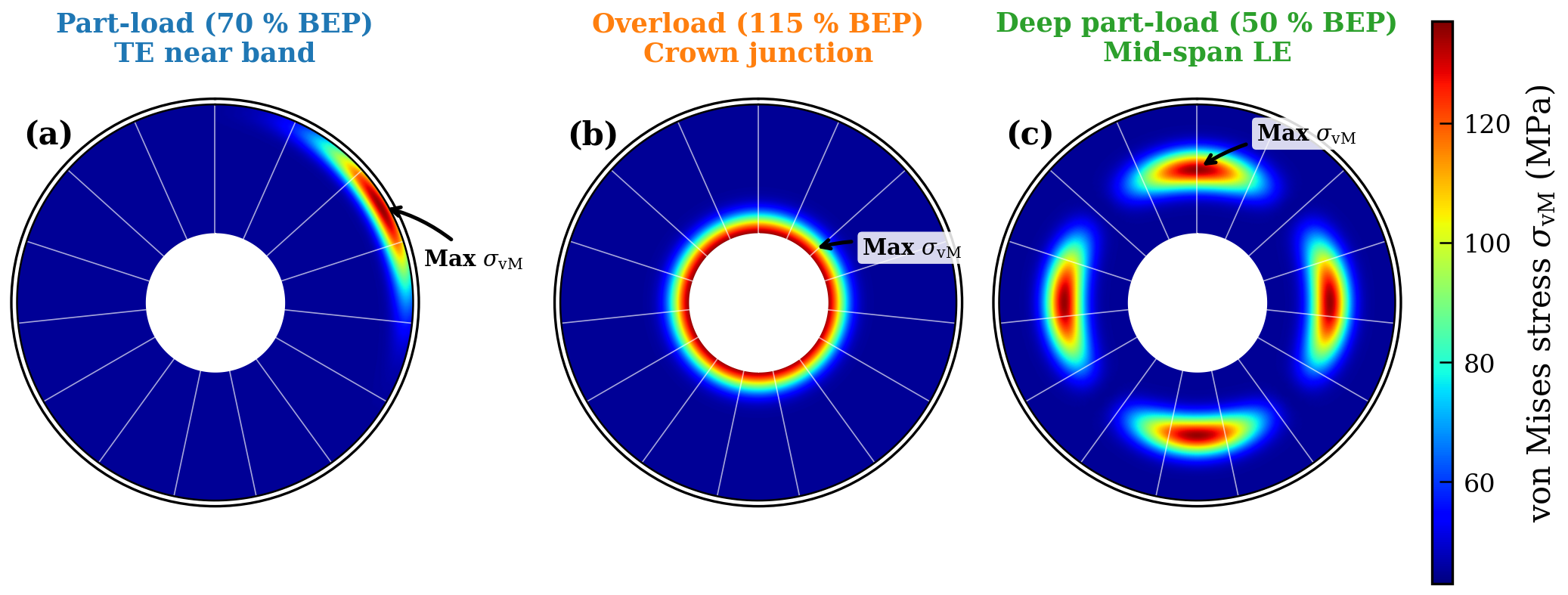
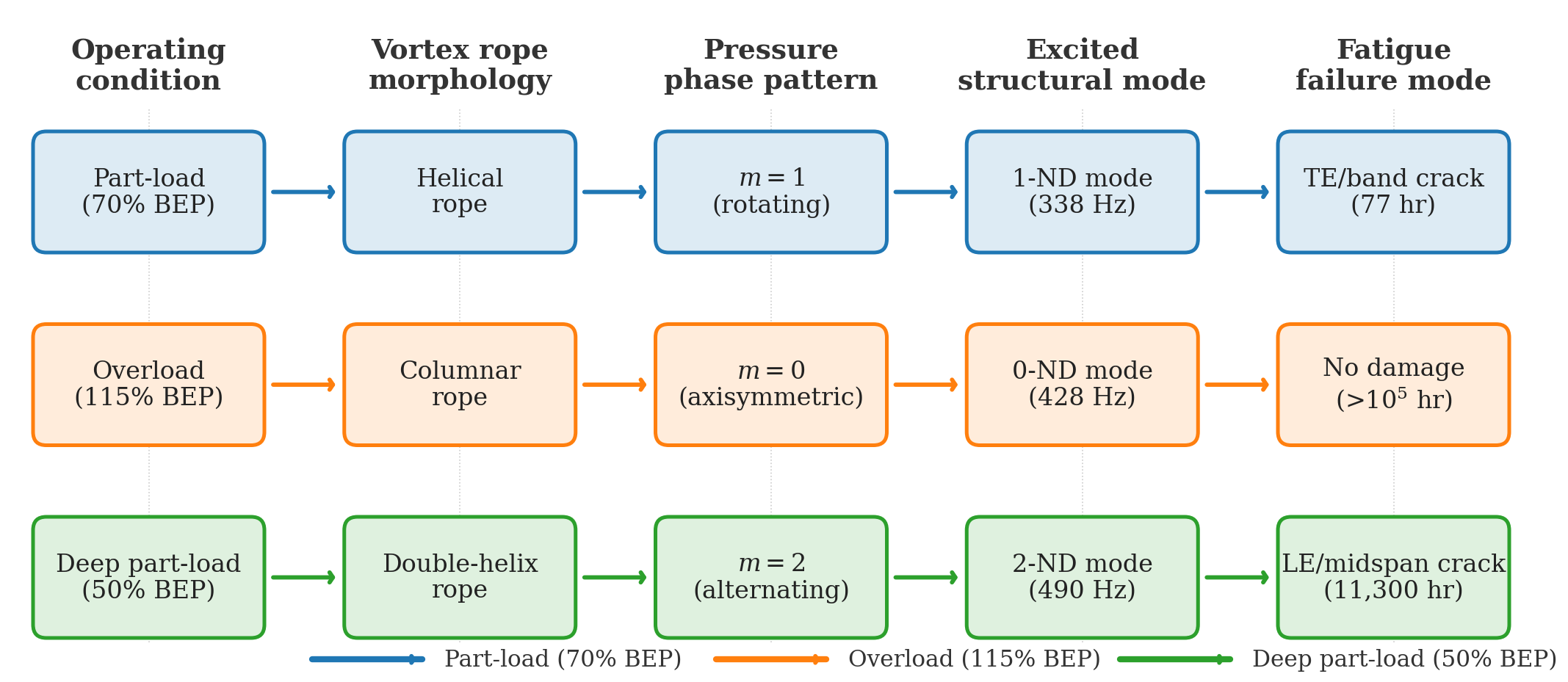
Francis turbines operating off-design develop distinct draft-tube vortex rope morphologies — helical at part-load, columnar at overload, and double-helix at deep part-load — each generating pressure pulsations with different circumferential phase distributions. We present an analytical framework that links these pressure phase patterns to mode-dependent runner stress and fatigue-life estimates using one-way FSI and rain-flow damage accumulation. The framework predicts three distinct failure mechanisms at different blade locations.
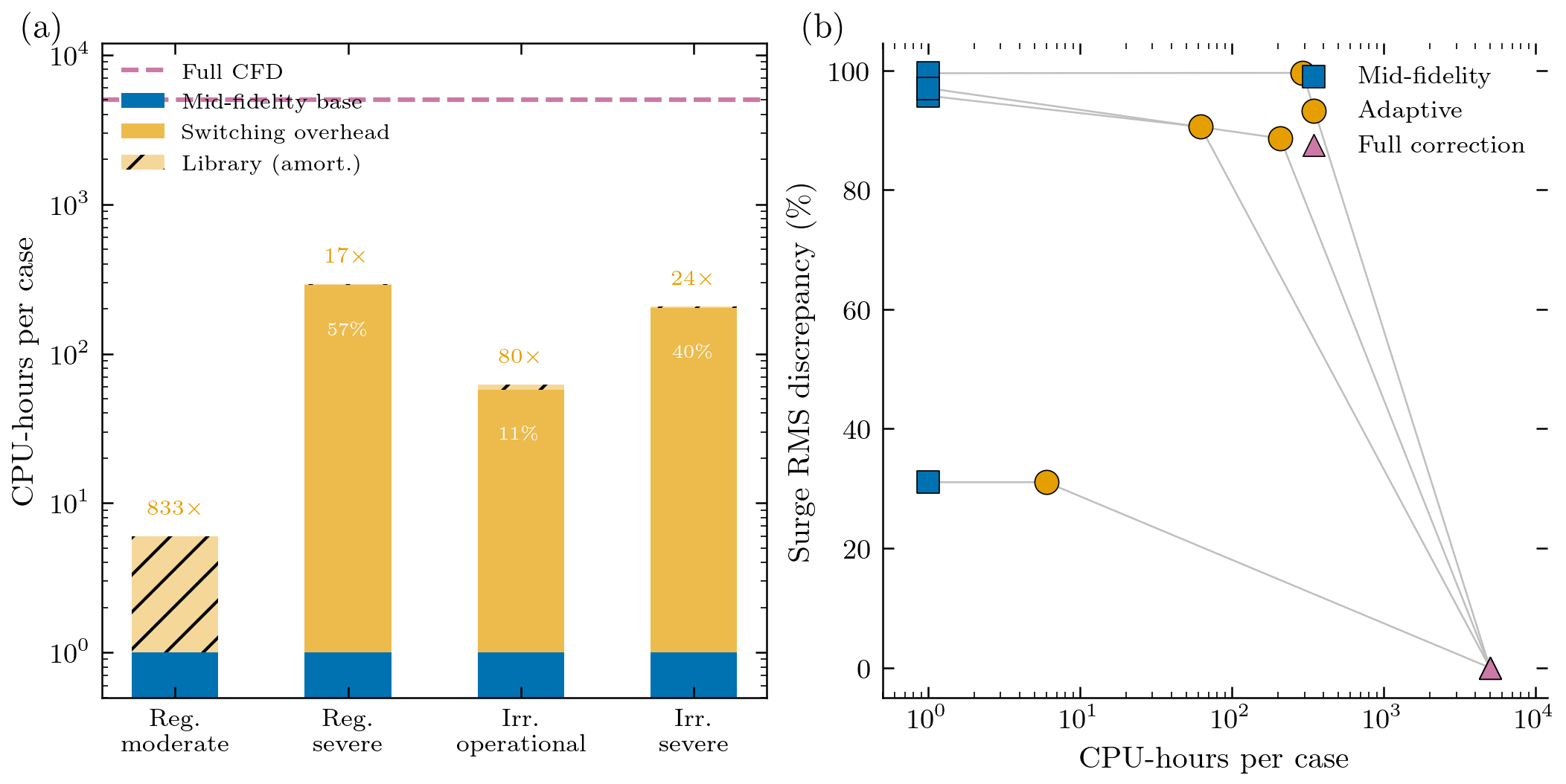
Adaptive-Fidelity Hydrodynamic Load Calculation for Floating Offshore Wind Turbines: A Physics-Based Switching Framework
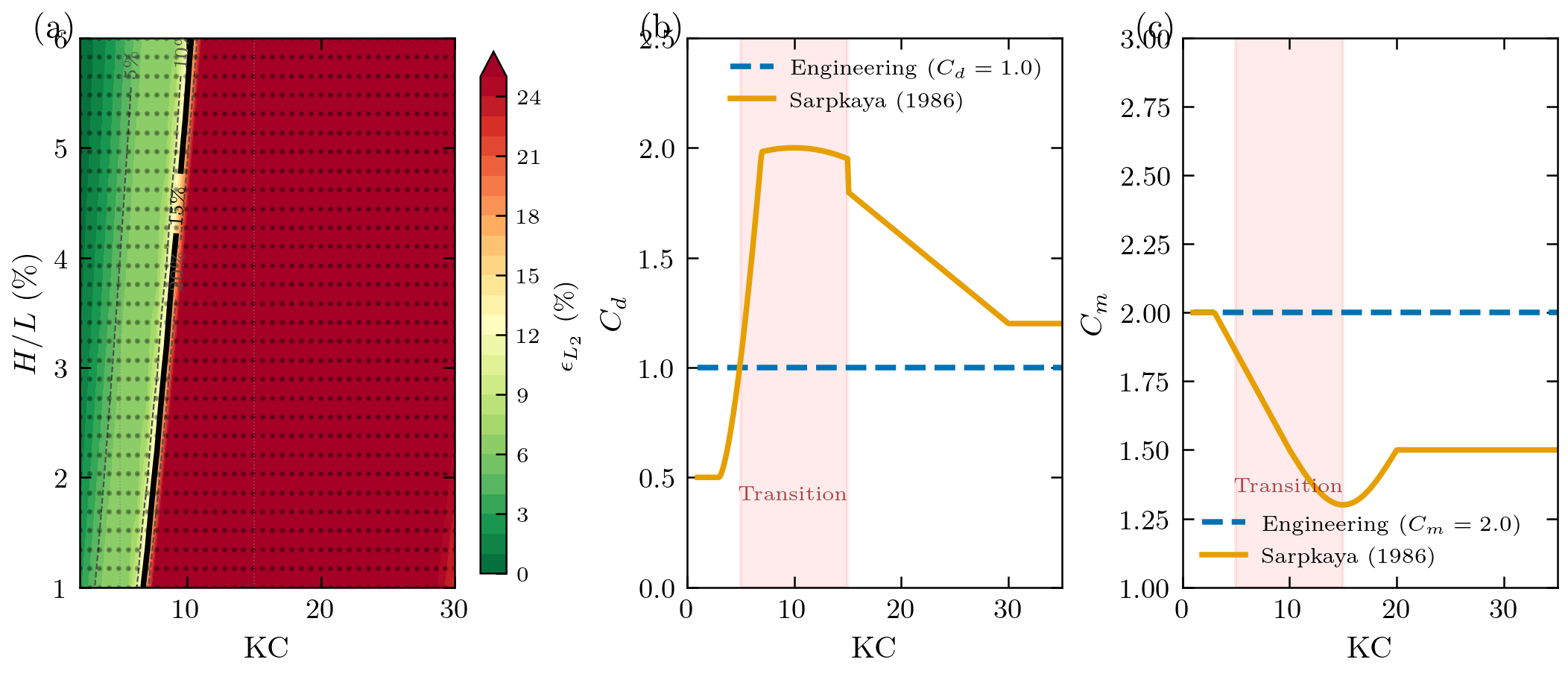
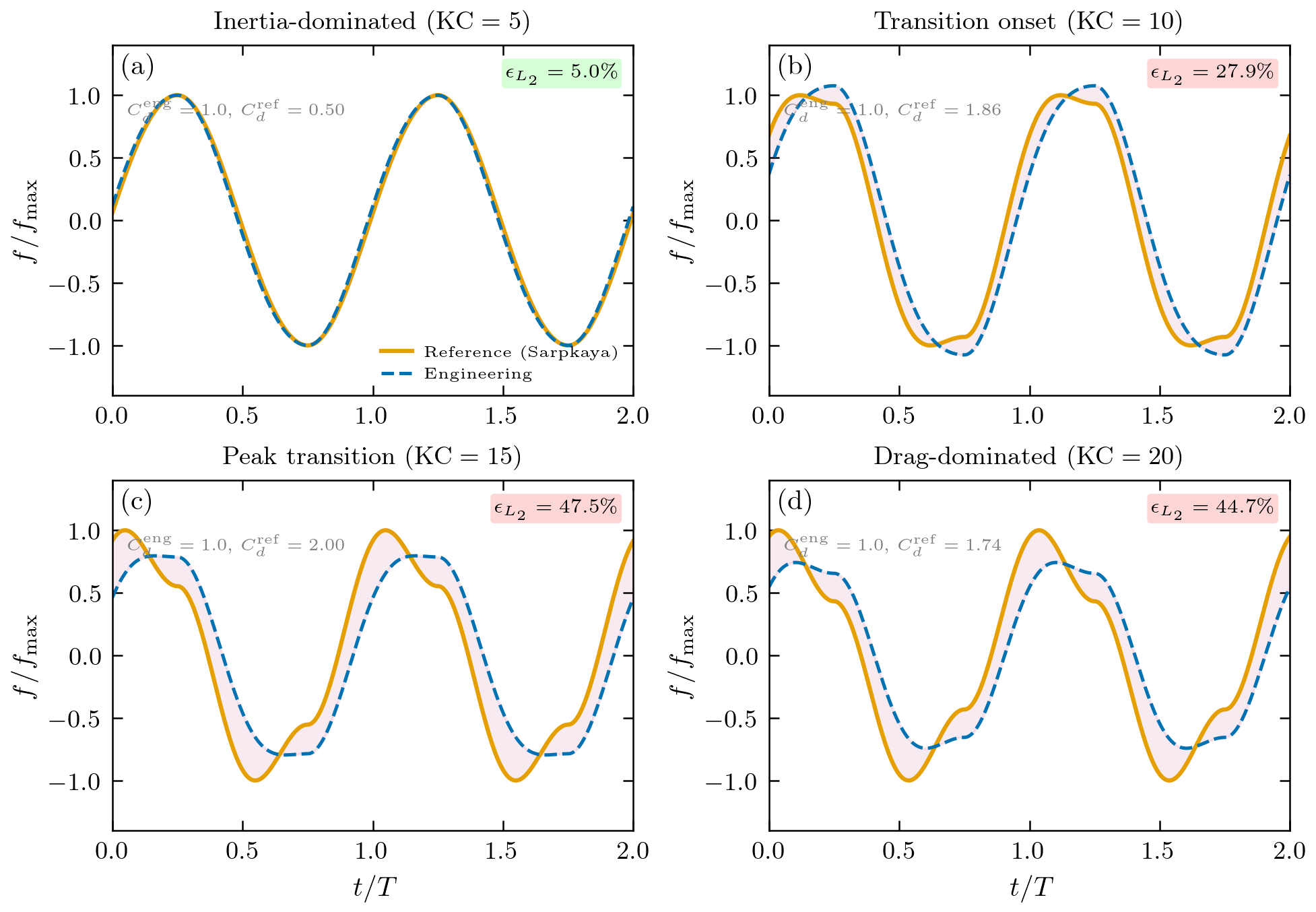
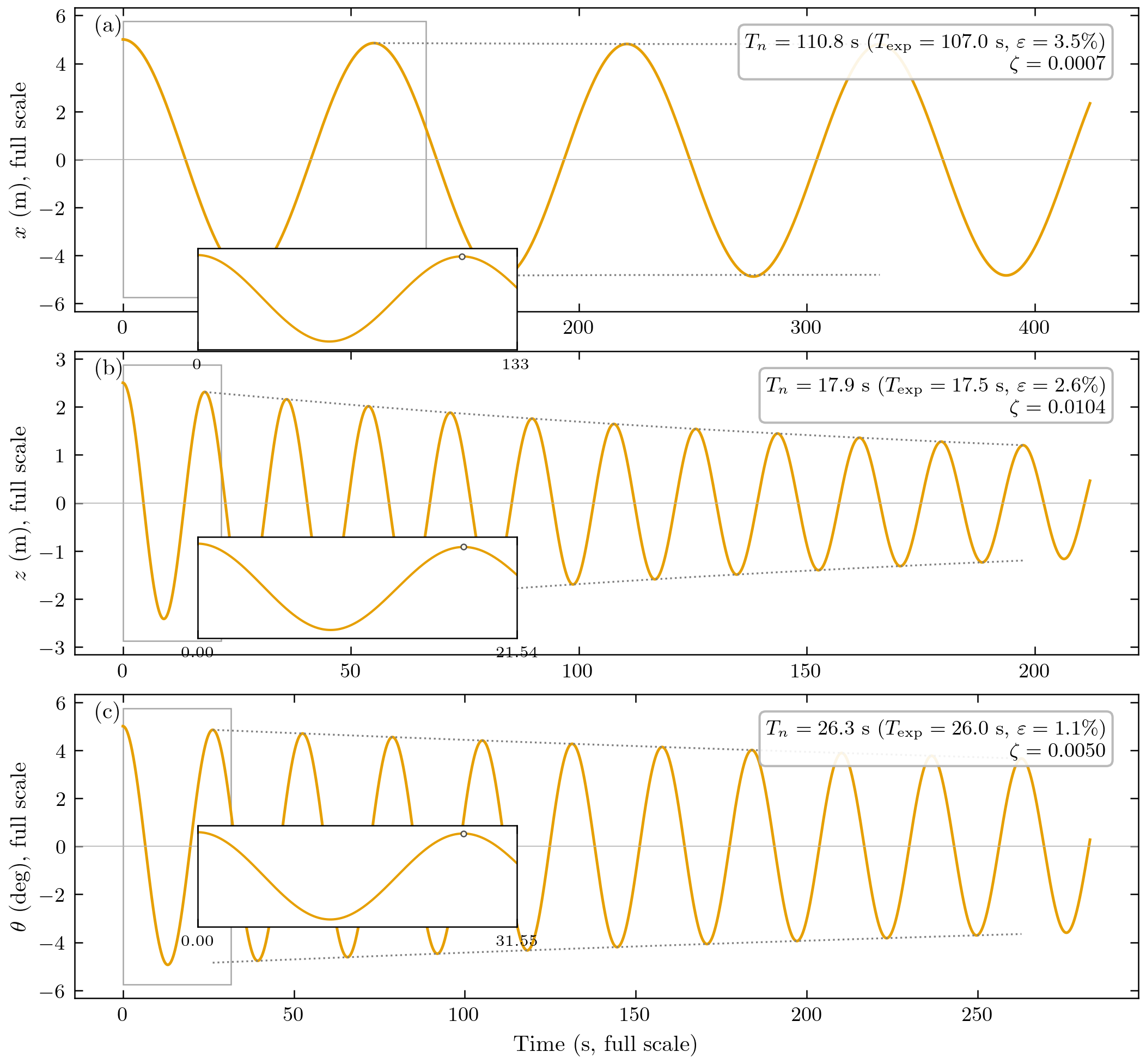
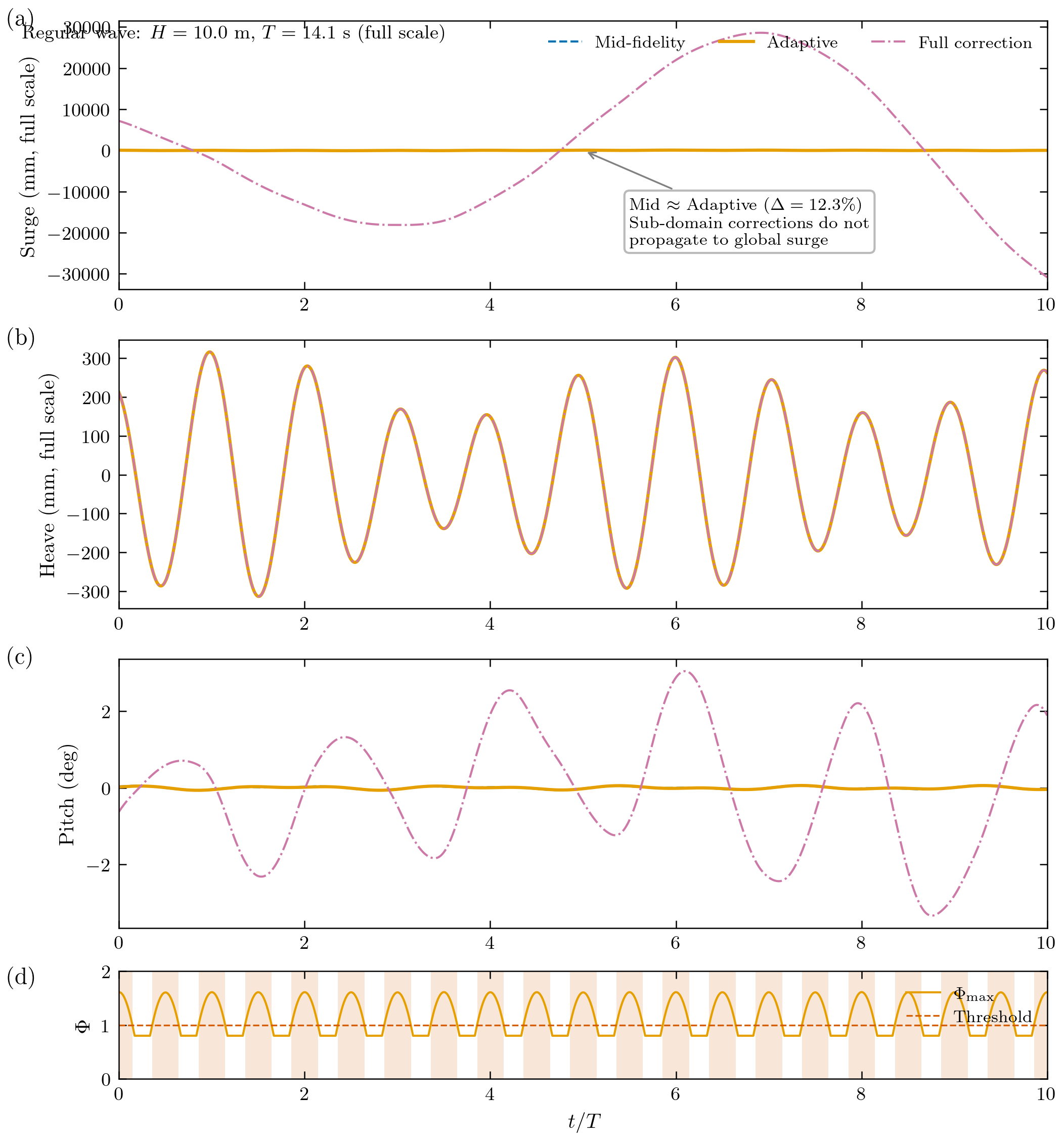
Mid-fidelity hydrodynamic models for floating offshore wind turbines rely on fixed Morison coefficients that do not capture nonlinear force variation across flow regimes. We present a diagnostic and correction framework that evaluates physics-based fidelity indicators — the Keulegan-Carpenter number, wave steepness, and relative motion amplitude — at each structural member and time step. Applied to the DeepCwind semi-submersible, the framework reveals that targeted corrections reduce surge in regular waves but amplify response by up to 278% in irregular seas, while unconditional correction triggers catastrophic resonant instability.