Jianou Jiang · 姜剑欧

PhD Researcher, Department of Engineering Science

University of Oxford

I develop computational and machine learning methods for energy systems — from wind farm wake modelling and electricity demand forecasting to turbine structural integrity and floating offshore wind hydrodynamics.

Research

J. Wind Eng. Ind. Aerodyn., 2026 Preprint Preview PDF

Parametric Assessment of Wind Farm Performance Under Varying Terrain and Atmospheric Stability Using an Analytical Wake Model

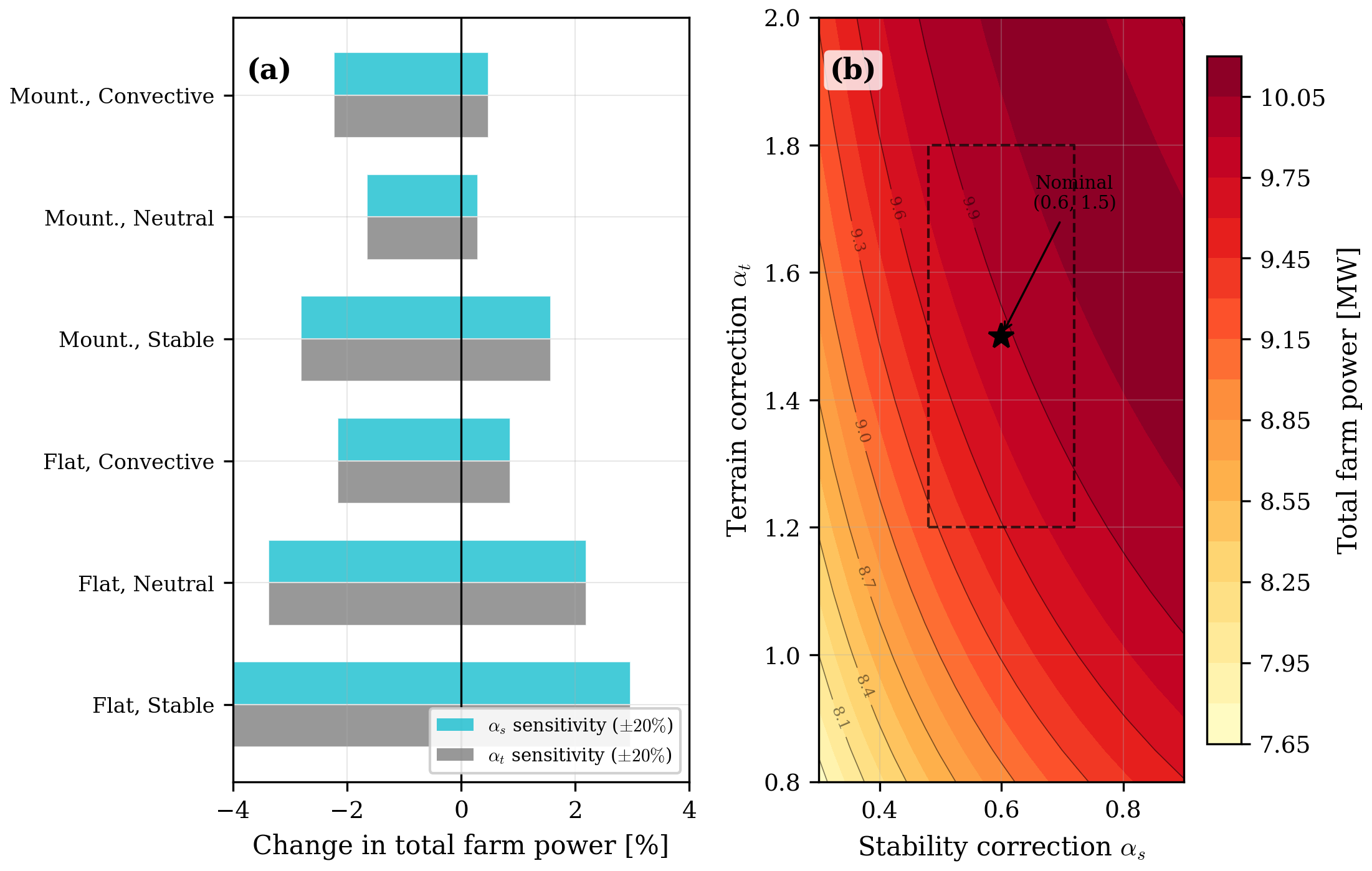
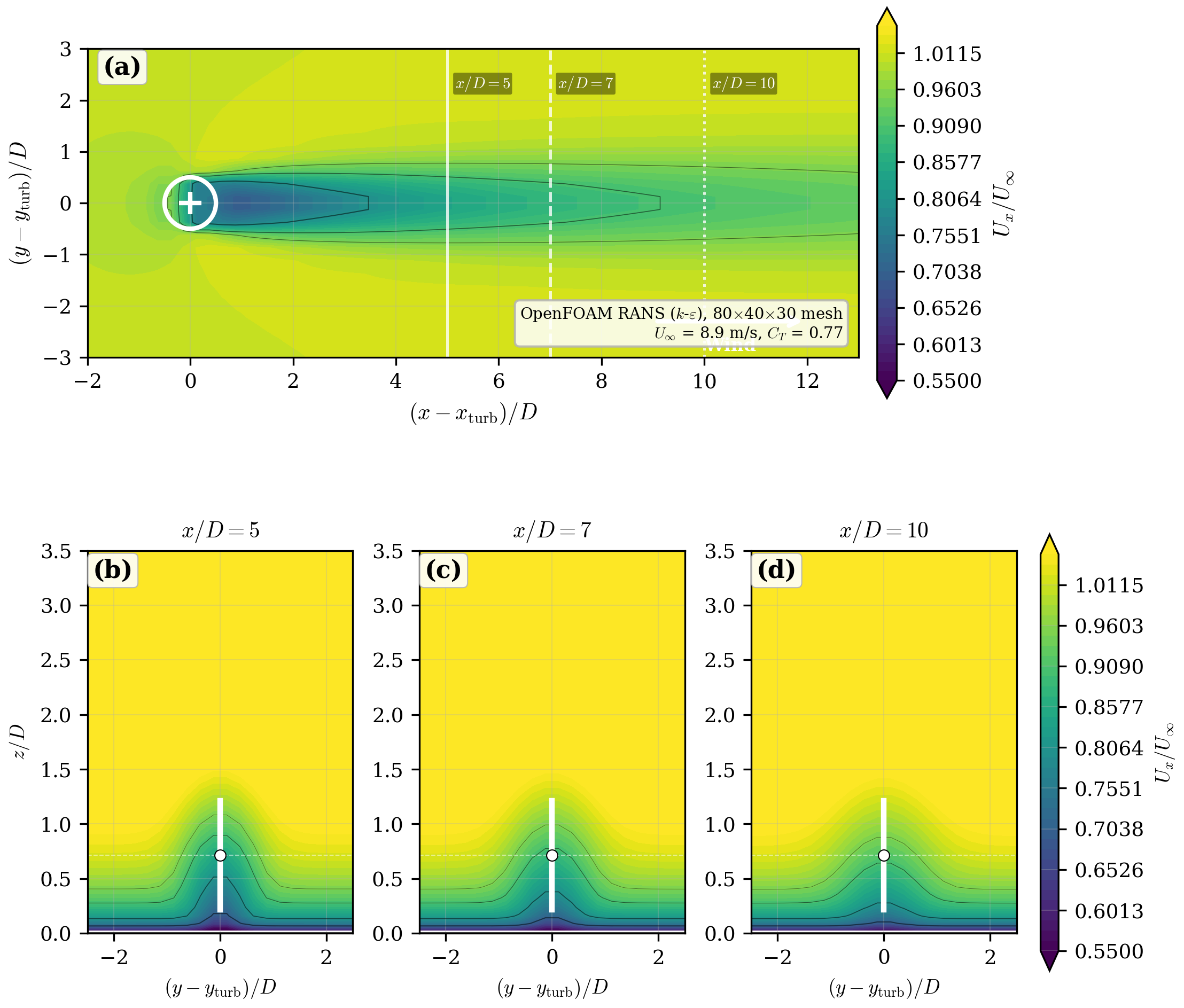
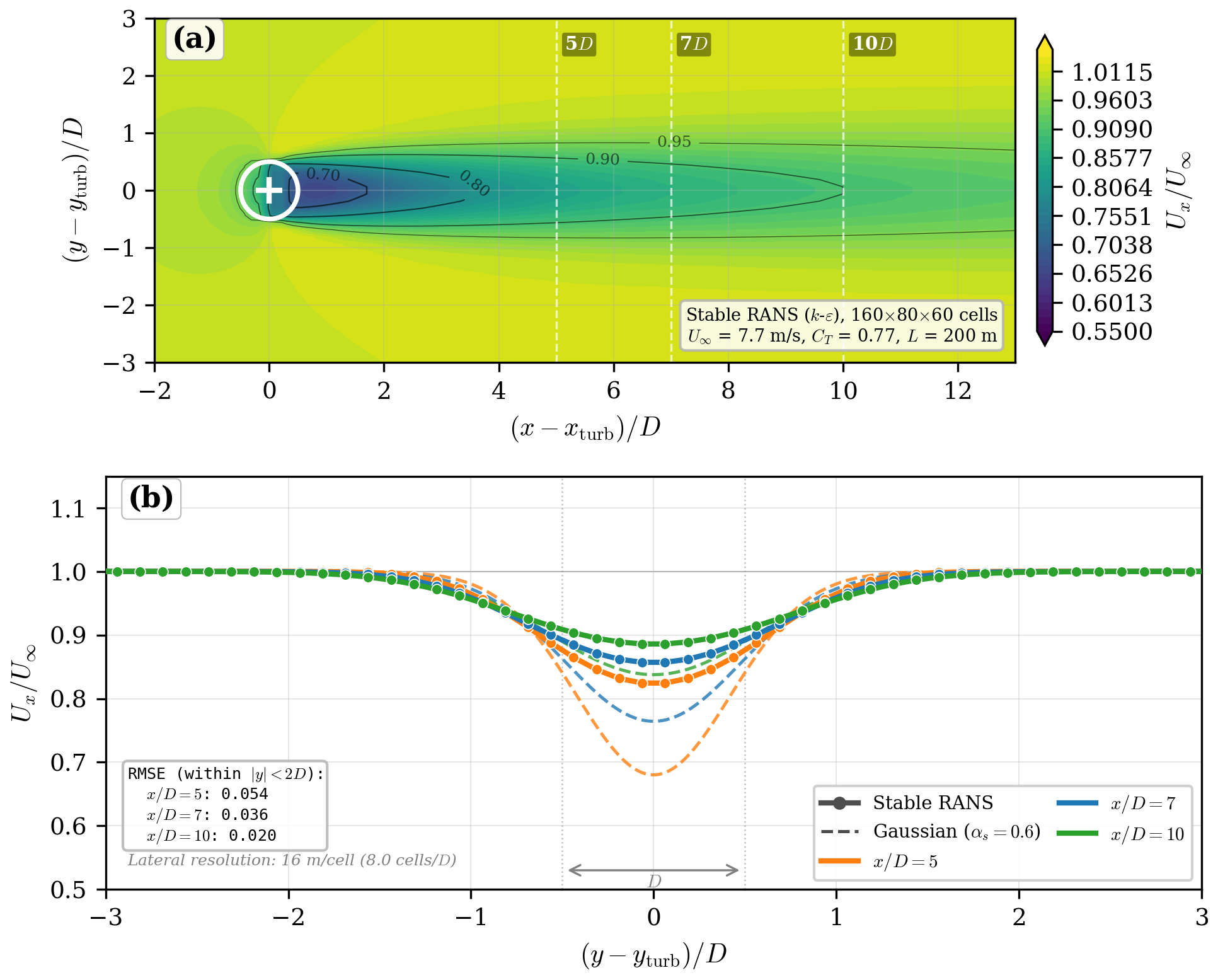
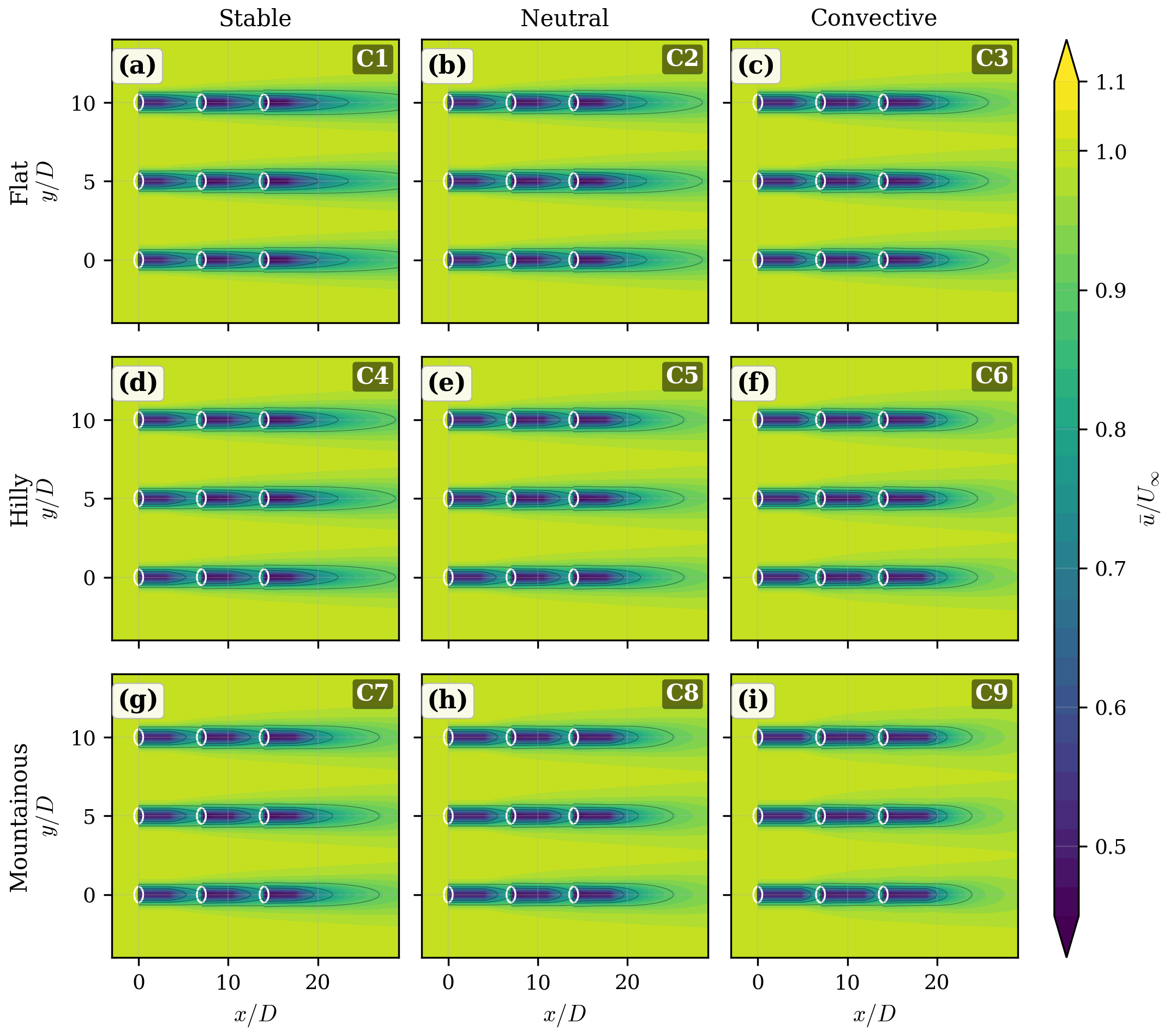
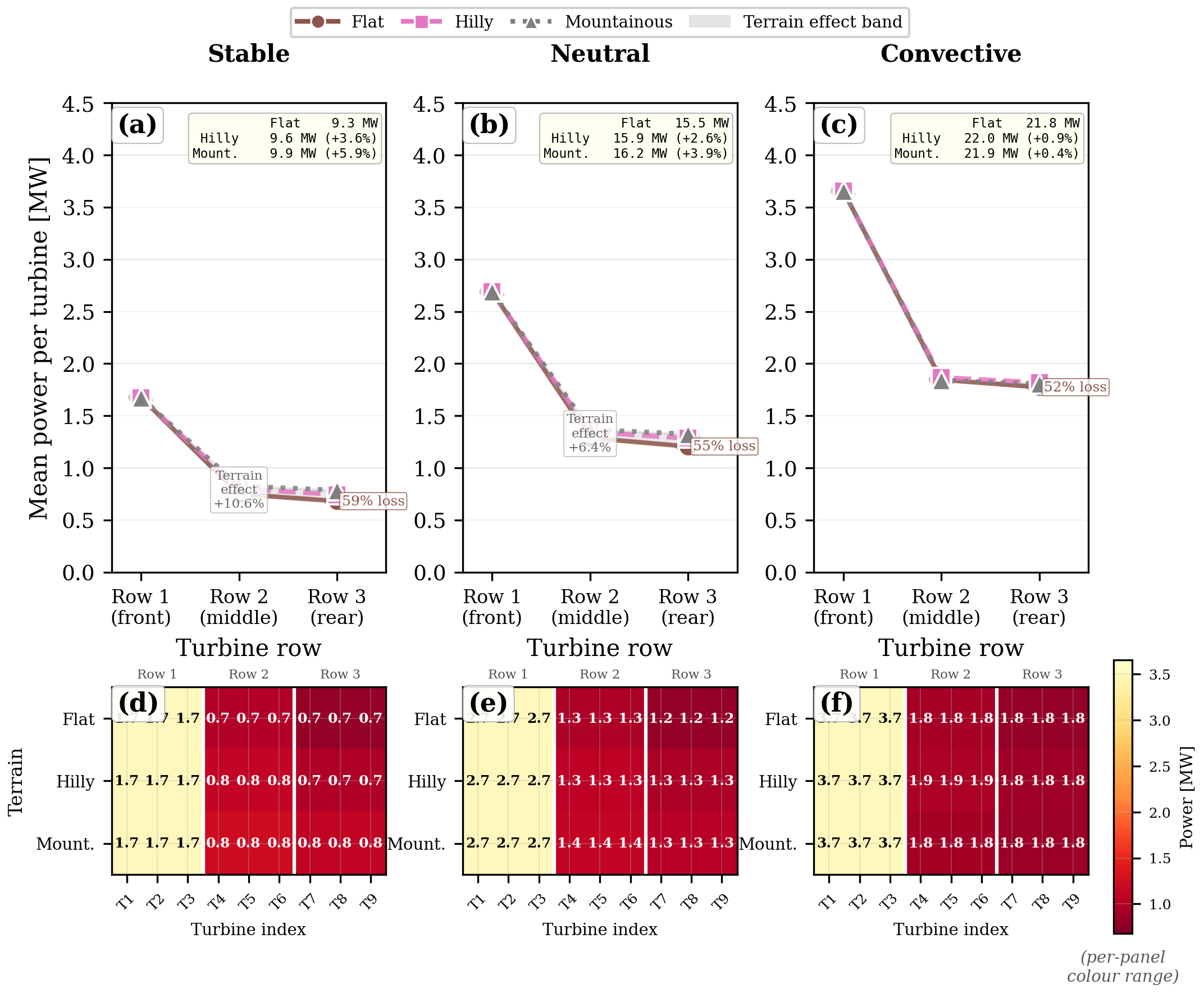
Stability-driven differences in wind farm power are commonly attributed to wake recovery rates, but the relative contributions of hub-height wind speed and wake dynamics are rarely separated. We present a matched-velocity analysis showing that when hub-height wind speed is held constant, the residual stability effect on wake recovery accounts for only ~7% variation in farm power — while total power variation exceeds a factor of 2.3 when each condition uses its Monin-Obukhov prescribed wind speed. The framework uses the Bastankhah-Porté-Agel Gaussian wake model with stability- and terrain-dependent corrections, applied to a 3x3 NREL 5 MW farm across three terrain types and three stability classes. RANS validation in OpenFOAM confirms farm-level power agreement within 5.2%.
Wind farmAnalytical wake modelAtmospheric stability Terrain effectsGaussian wakeMonin-Obukhov similarity OpenFOAMRANS validation
Applied Energy, 2026 Preprint Preview PDF

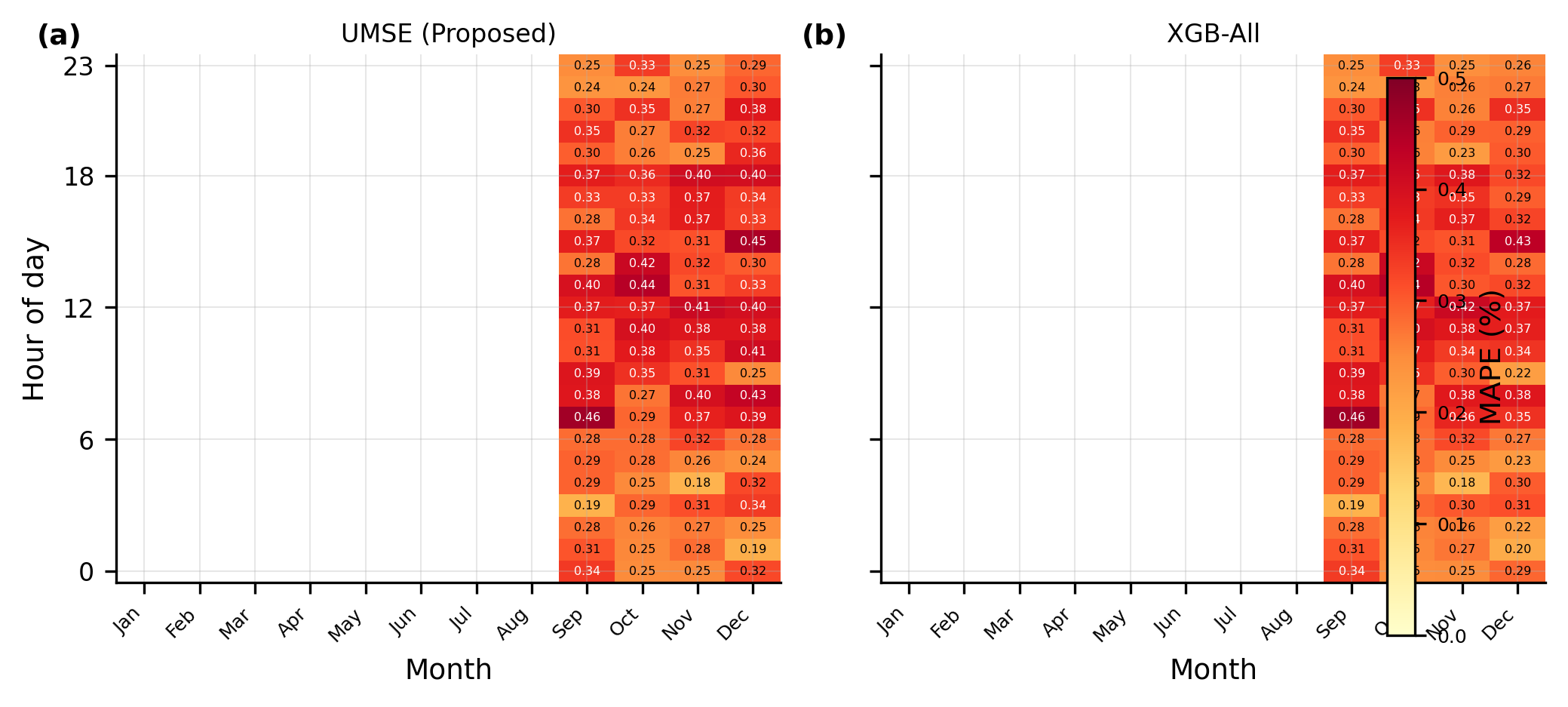
Machine Learning Demand Forecasting Integrating Weather, Usage Patterns, and Pricing to Reduce Utility Generation Waste

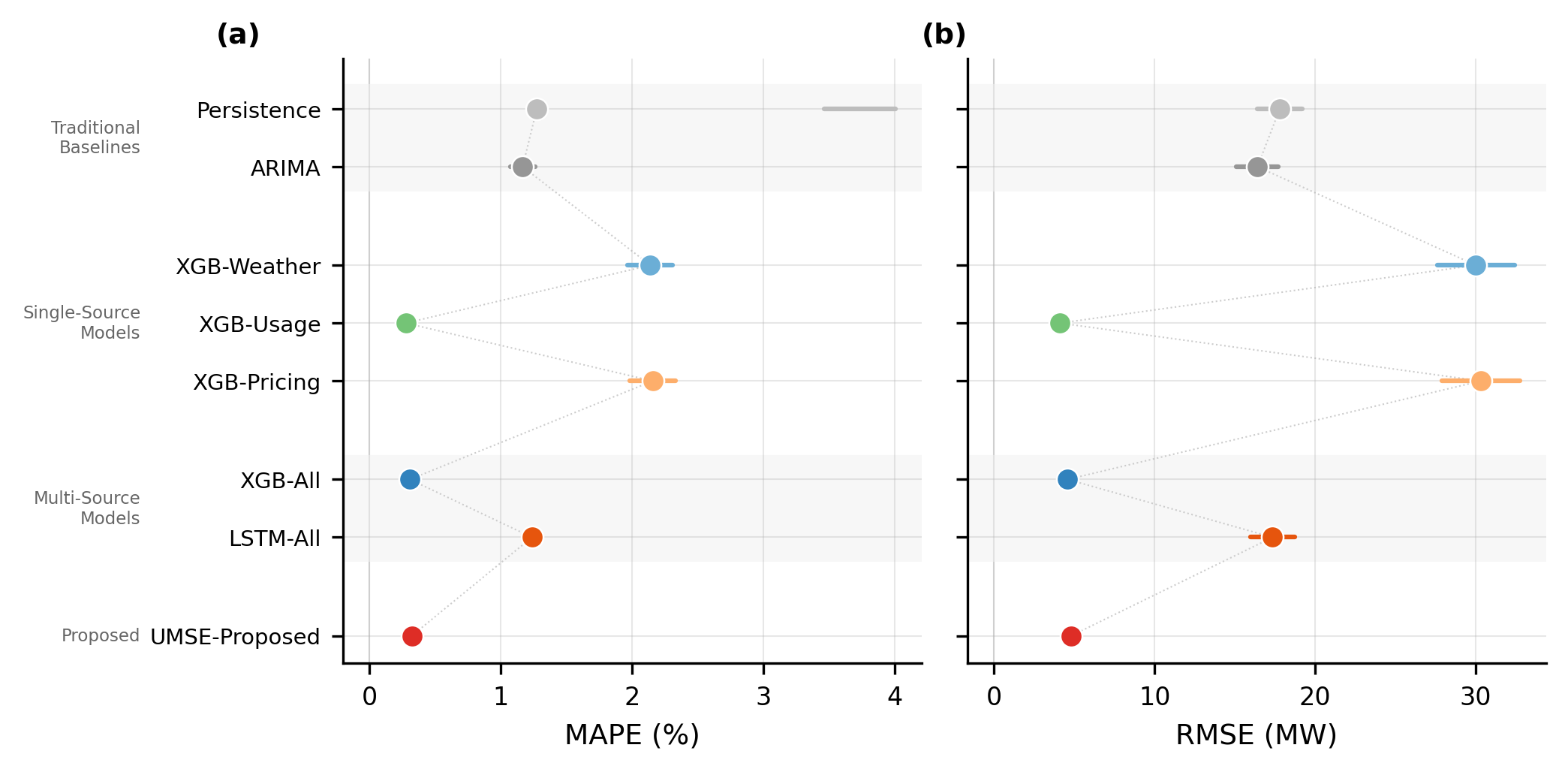
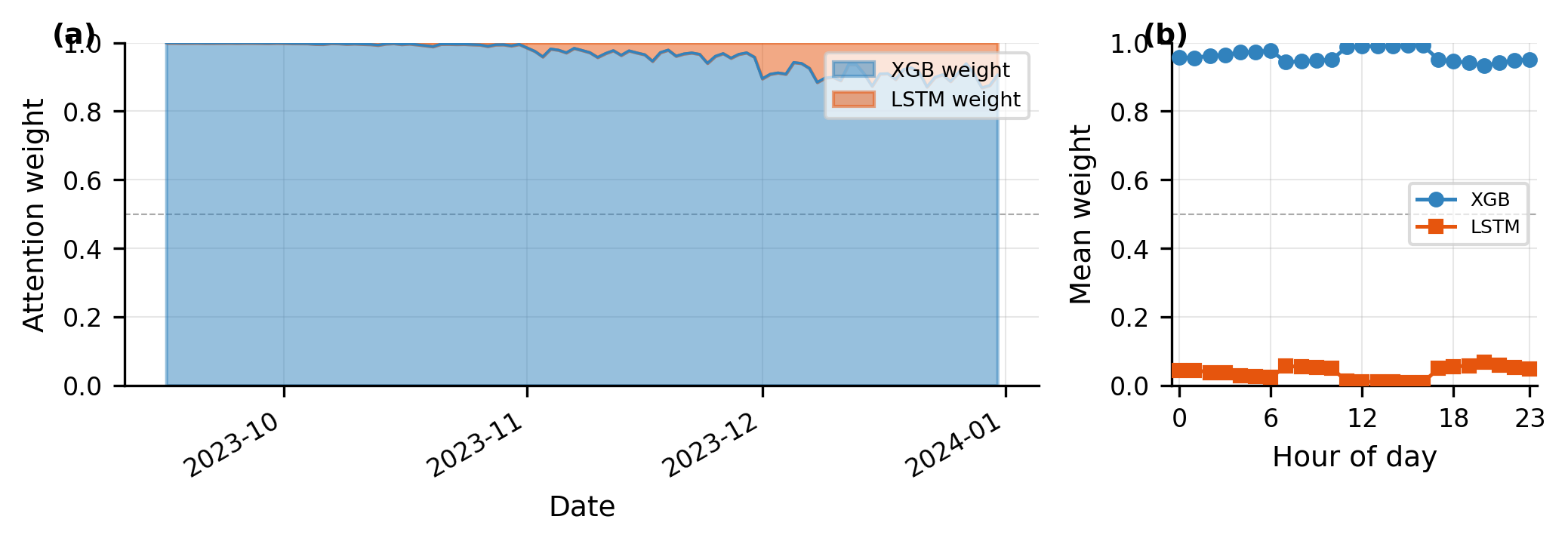
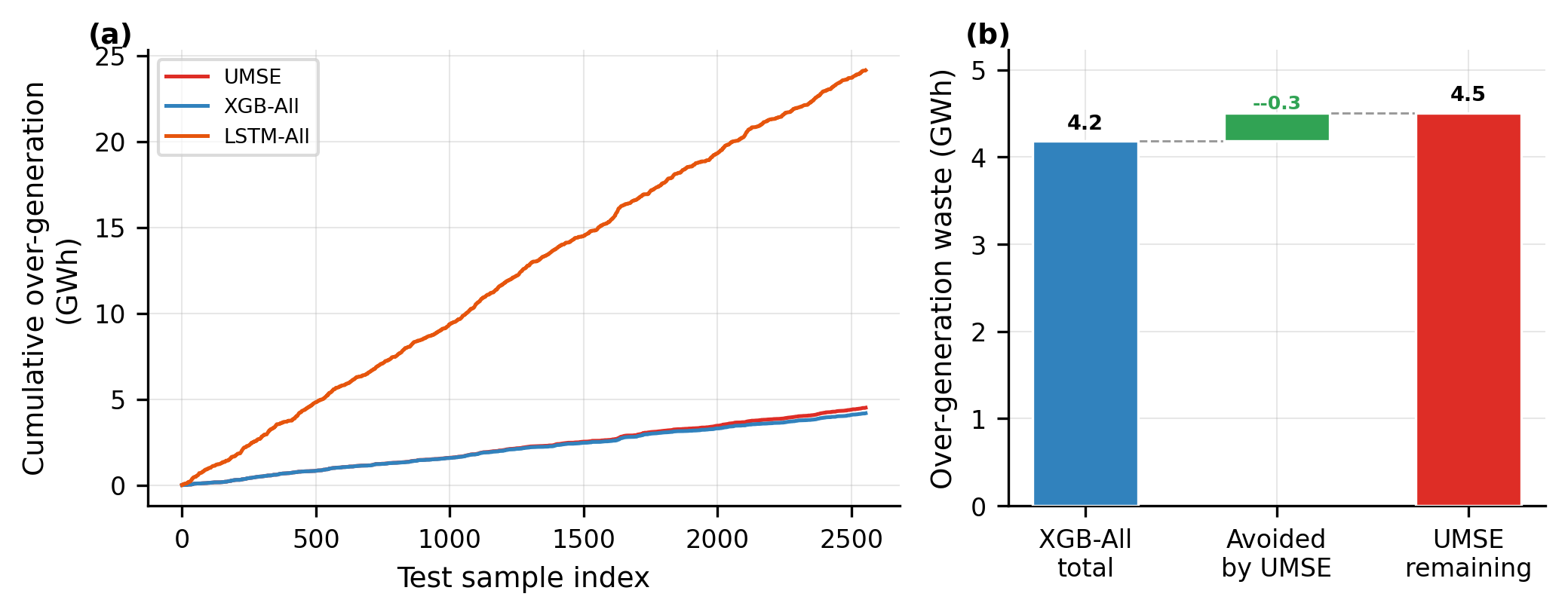
We propose the Unified Multi-Source Ensemble (UMSE) framework, which fuses gradient-boosted trees (XGBoost) and LSTM networks through a learned attention mechanism to forecast short-term electricity demand. Evaluated on a dataset reproducing the statistical properties of a mid-sized North American utility, all models incorporating usage features achieve MAPE below 1%. An honest evaluation reveals that XGBoost alone outperforms the full ensemble — the attention mechanism assigns 96.3% weight to the tree branch. Both approaches reduce cumulative over-generation waste by approximately 77% relative to persistence baseline.
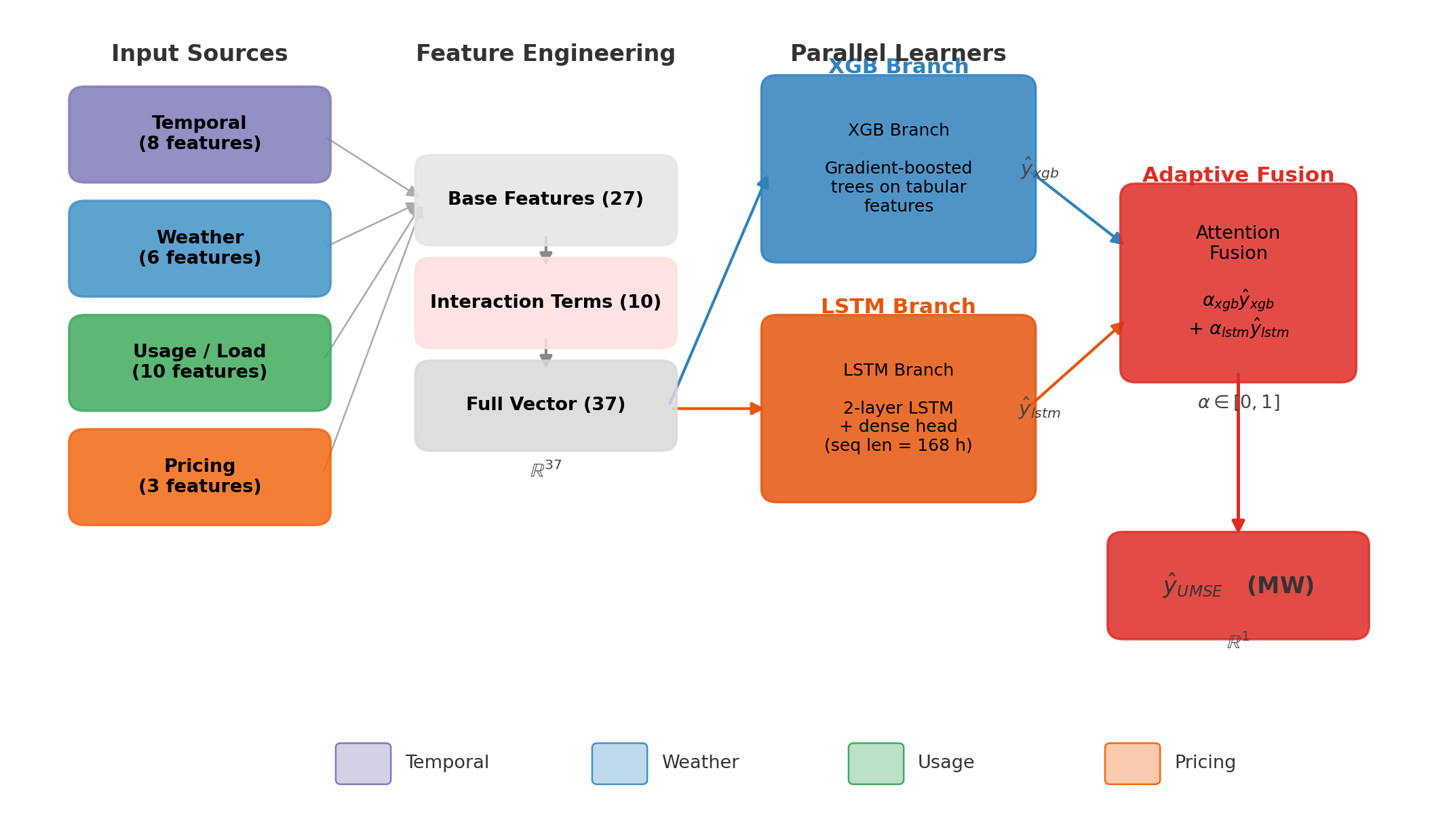
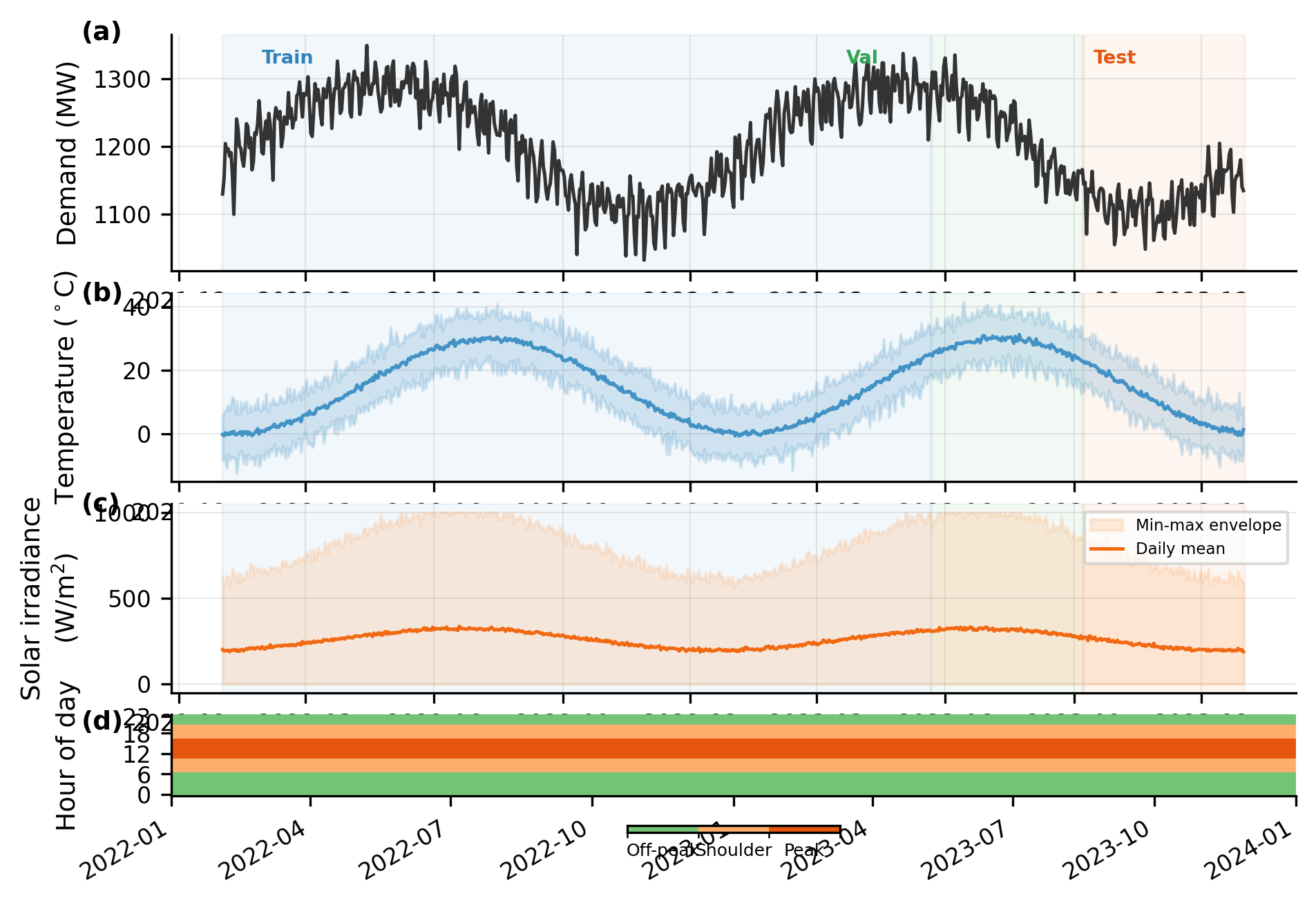
Electricity demand forecastingMachine learningXGBoost LSTMAttention mechanismGeneration waste
Renewable Energy, 2026 Preprint Preview PDF

Vortex Rope Morphology Controls Runner Fatigue Failure Mode: An Analytical Framework Linking Draft Tube Flow Physics to Blade Life Prediction in Francis Turbines

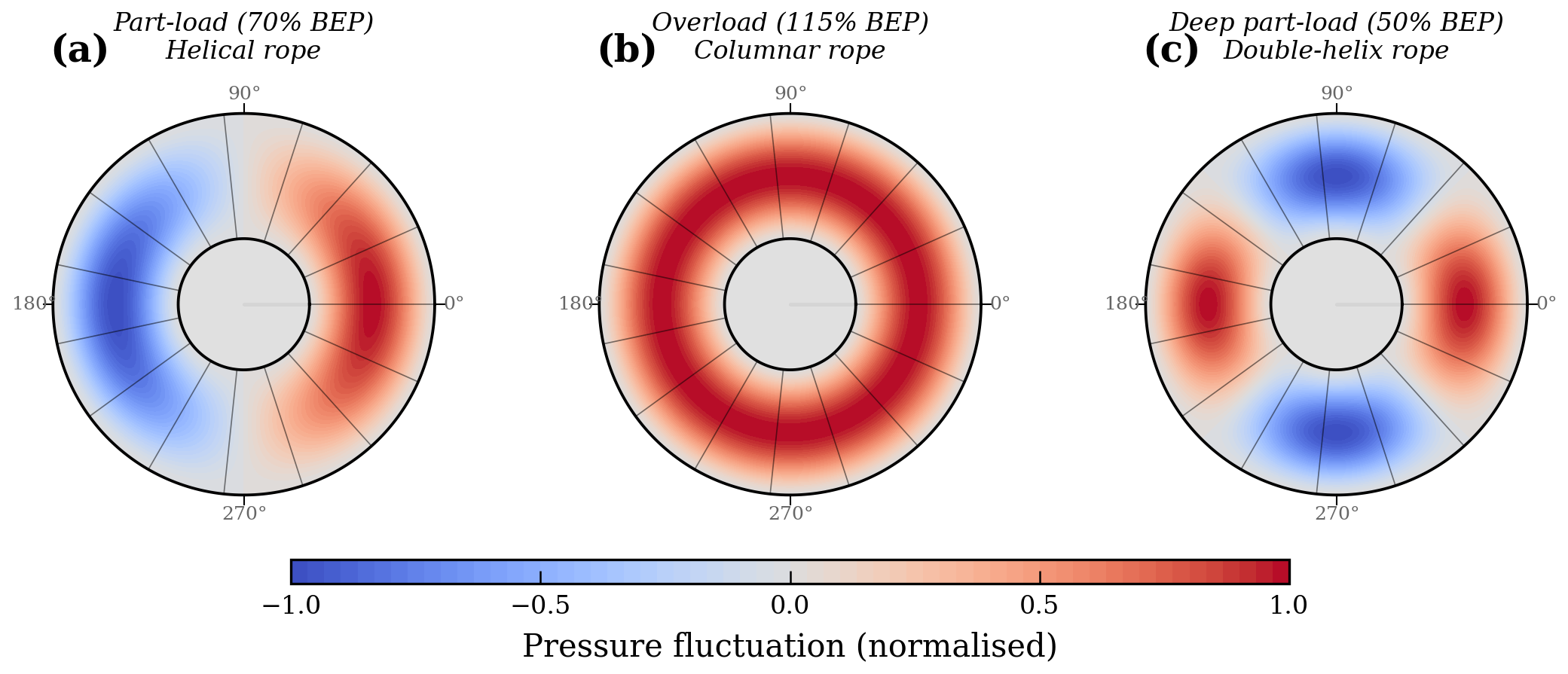
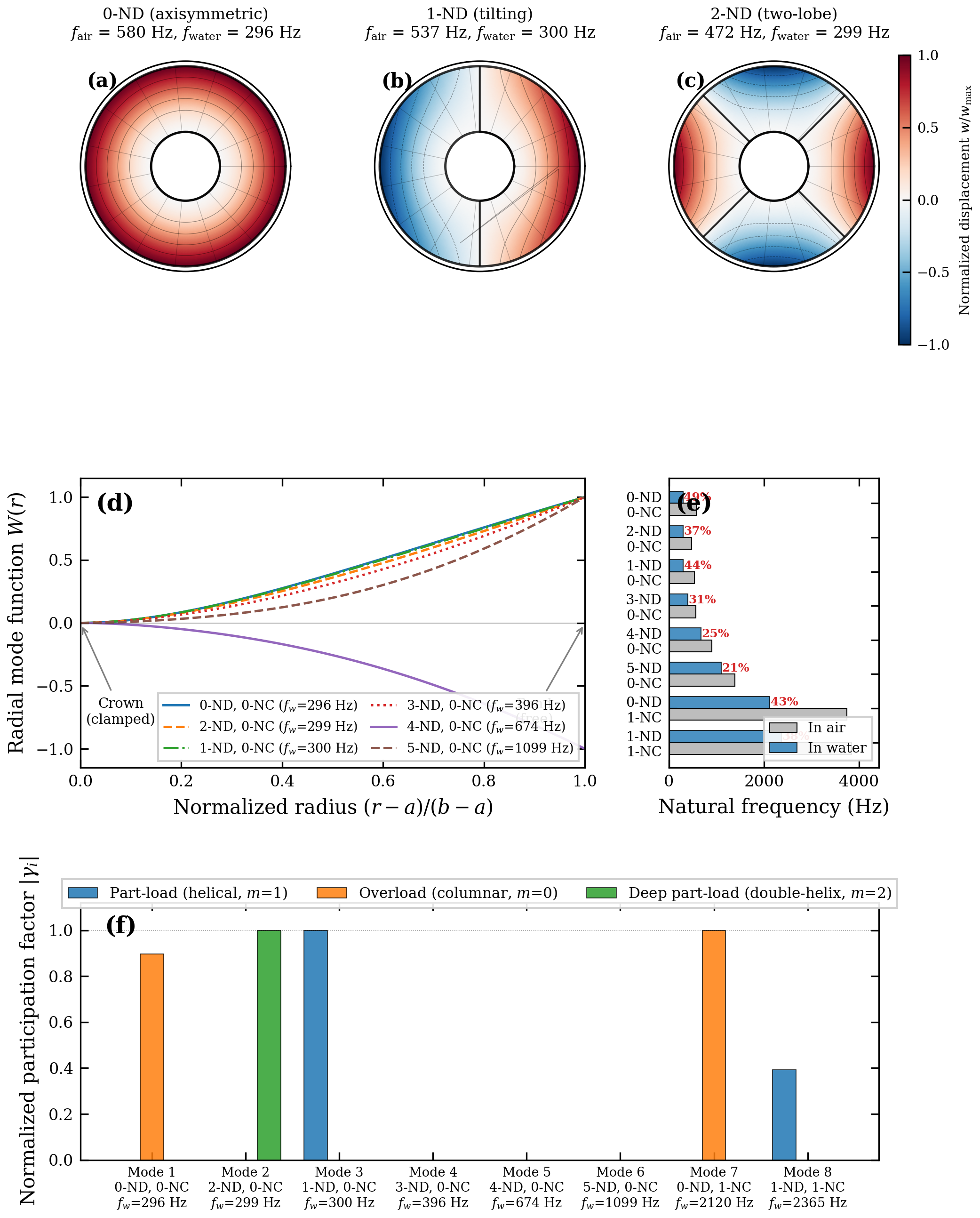
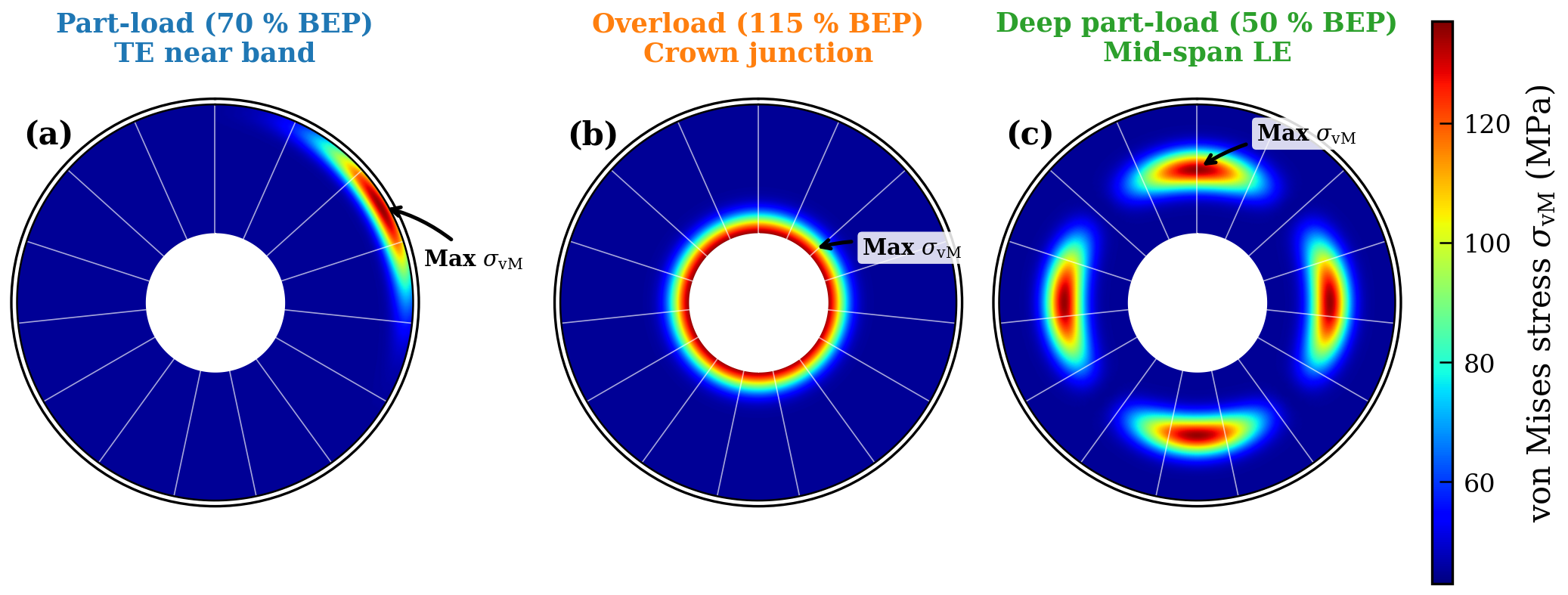
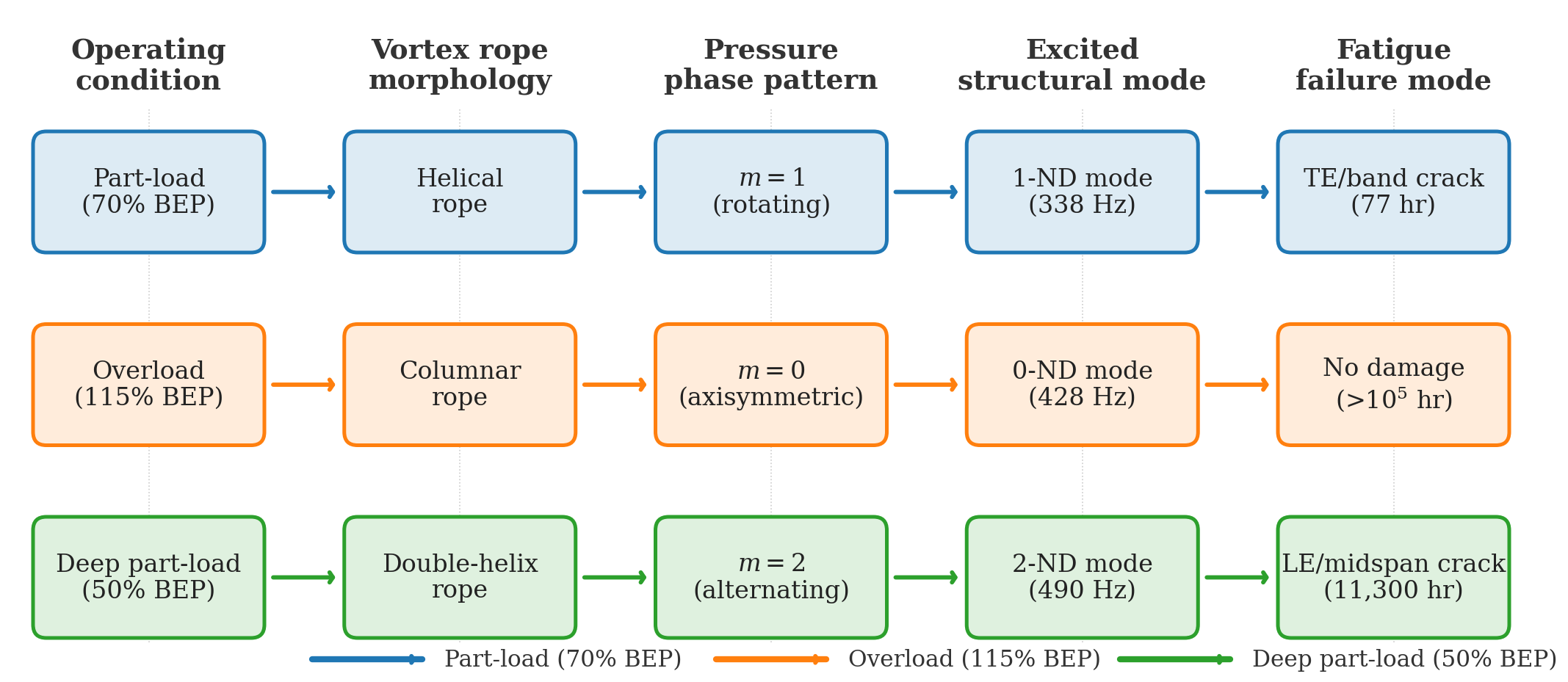
Francis turbines operating off-design develop distinct draft-tube vortex rope morphologies — helical at part-load, columnar at overload, and double-helix at deep part-load — each generating pressure pulsations with different circumferential phase distributions. We present an analytical framework that links these pressure phase patterns to mode-dependent runner stress and fatigue-life estimates using one-way FSI and rain-flow damage accumulation. The framework predicts three distinct failure mechanisms at different blade locations.
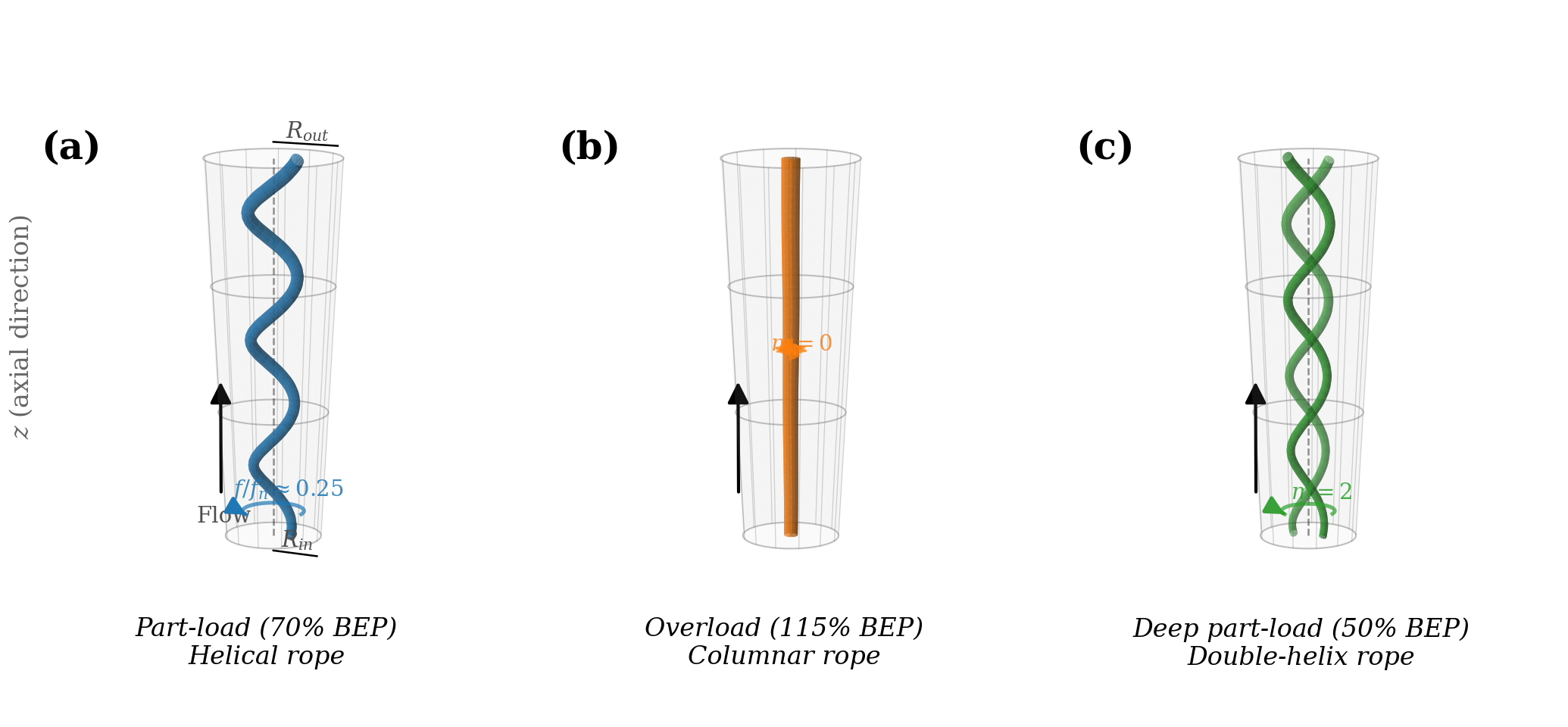
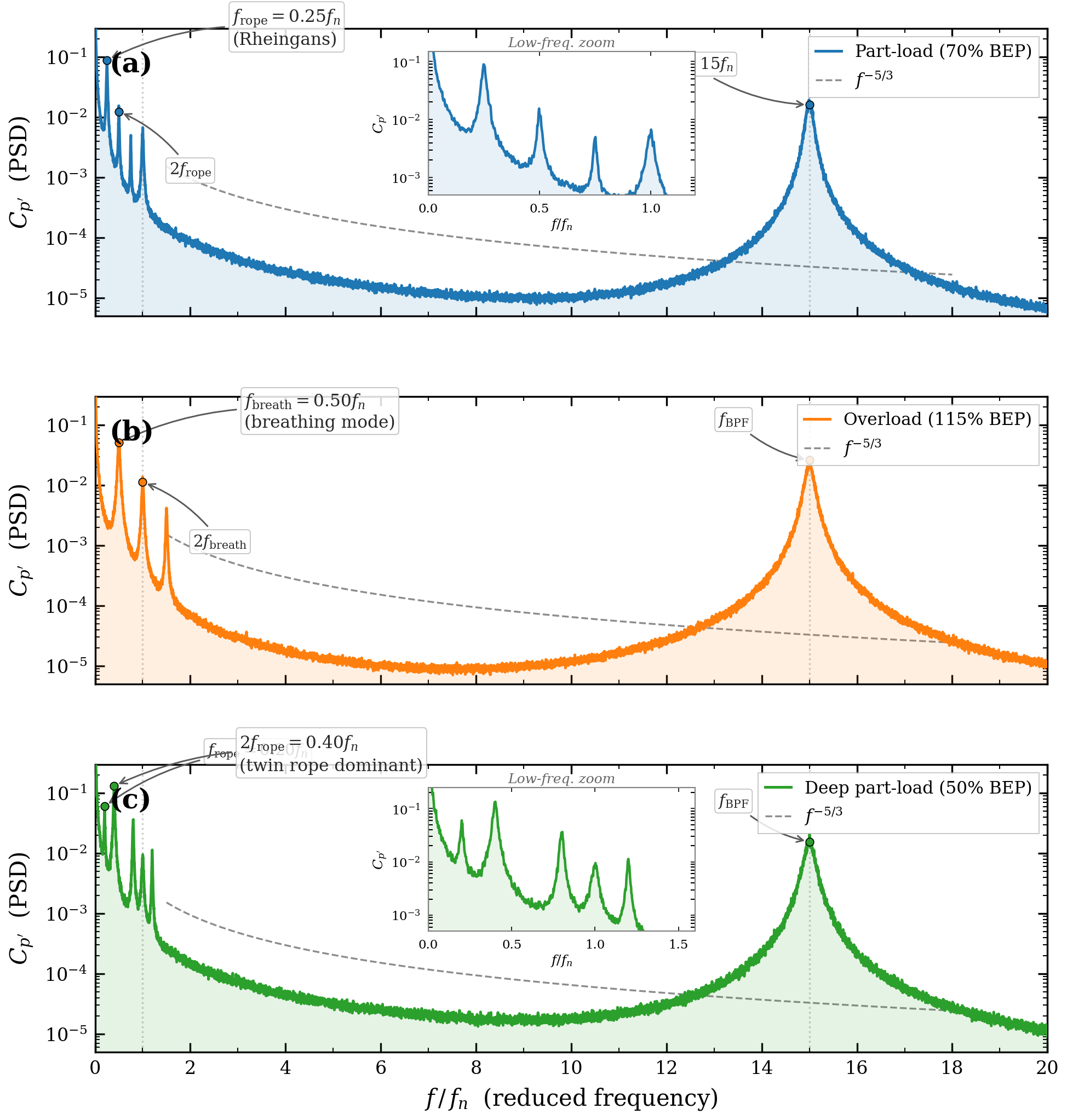
Francis turbineVortex ropeDraft tube cavitation Fluid-structure interactionFatigue lifePressure pulsation
Ocean Engineering, 2026 Preprint Preview PDF

Adaptive-Fidelity Hydrodynamic Load Calculation for Floating Offshore Wind Turbines: A Physics-Based Switching Framework

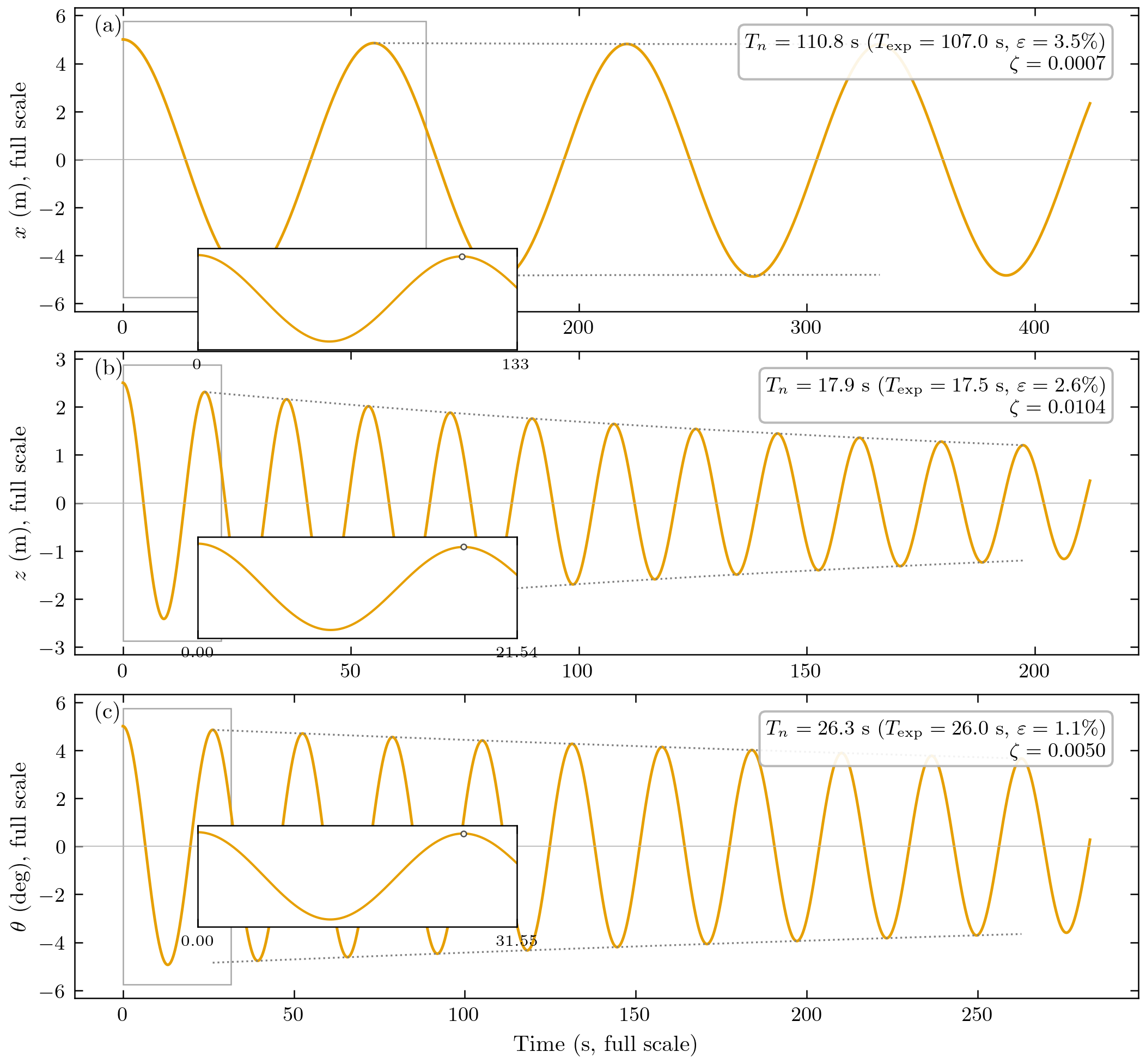
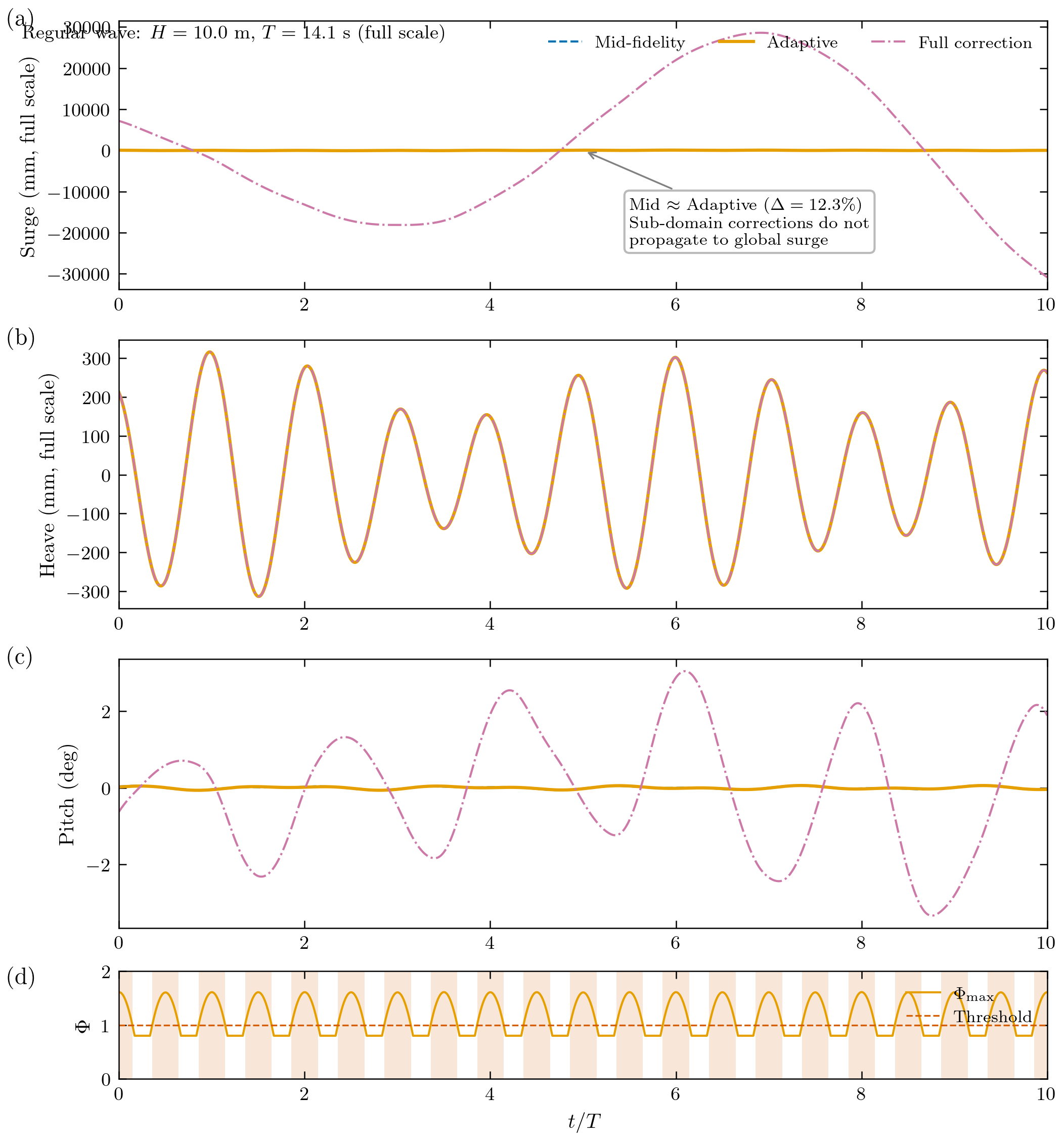
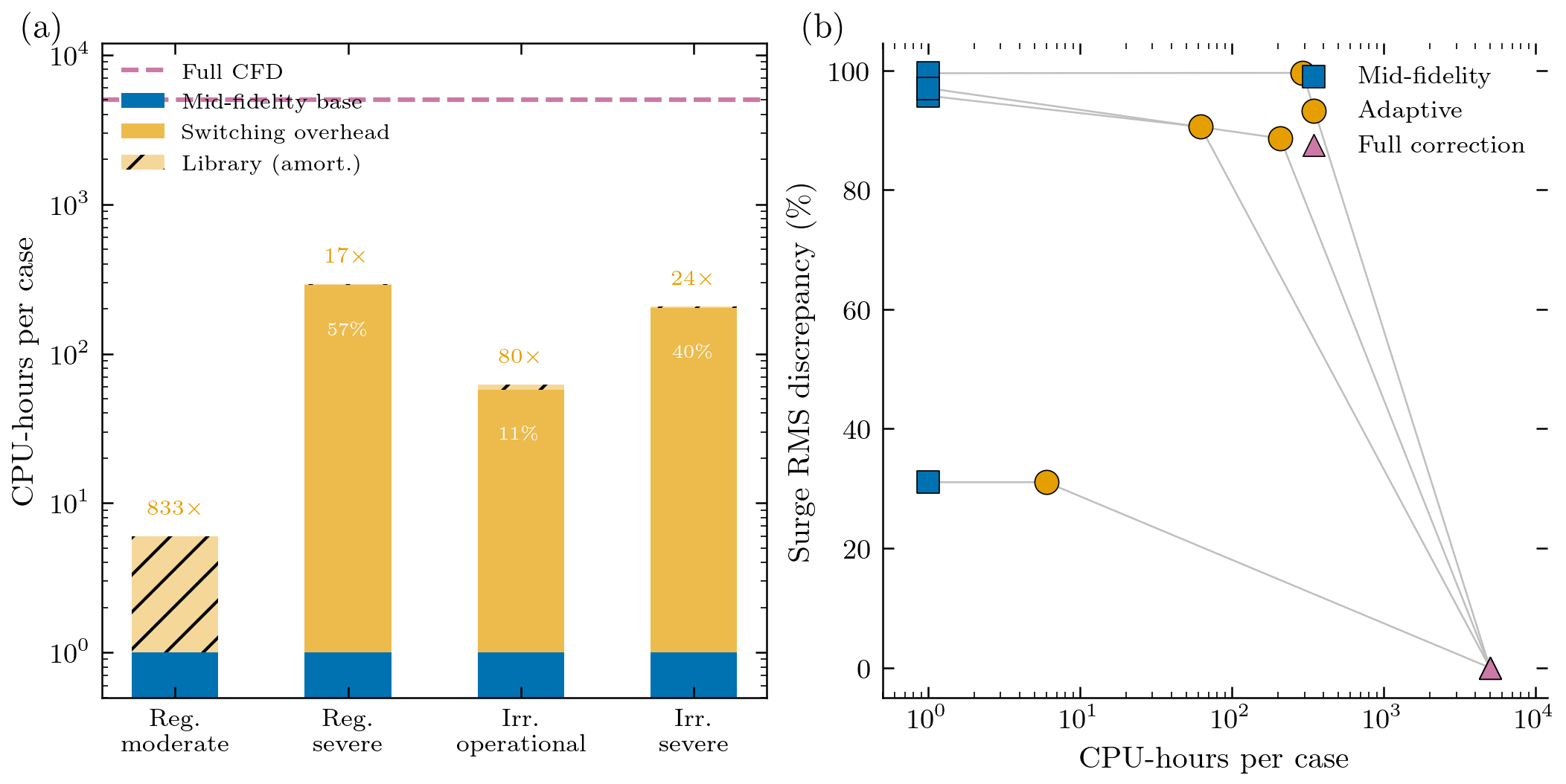
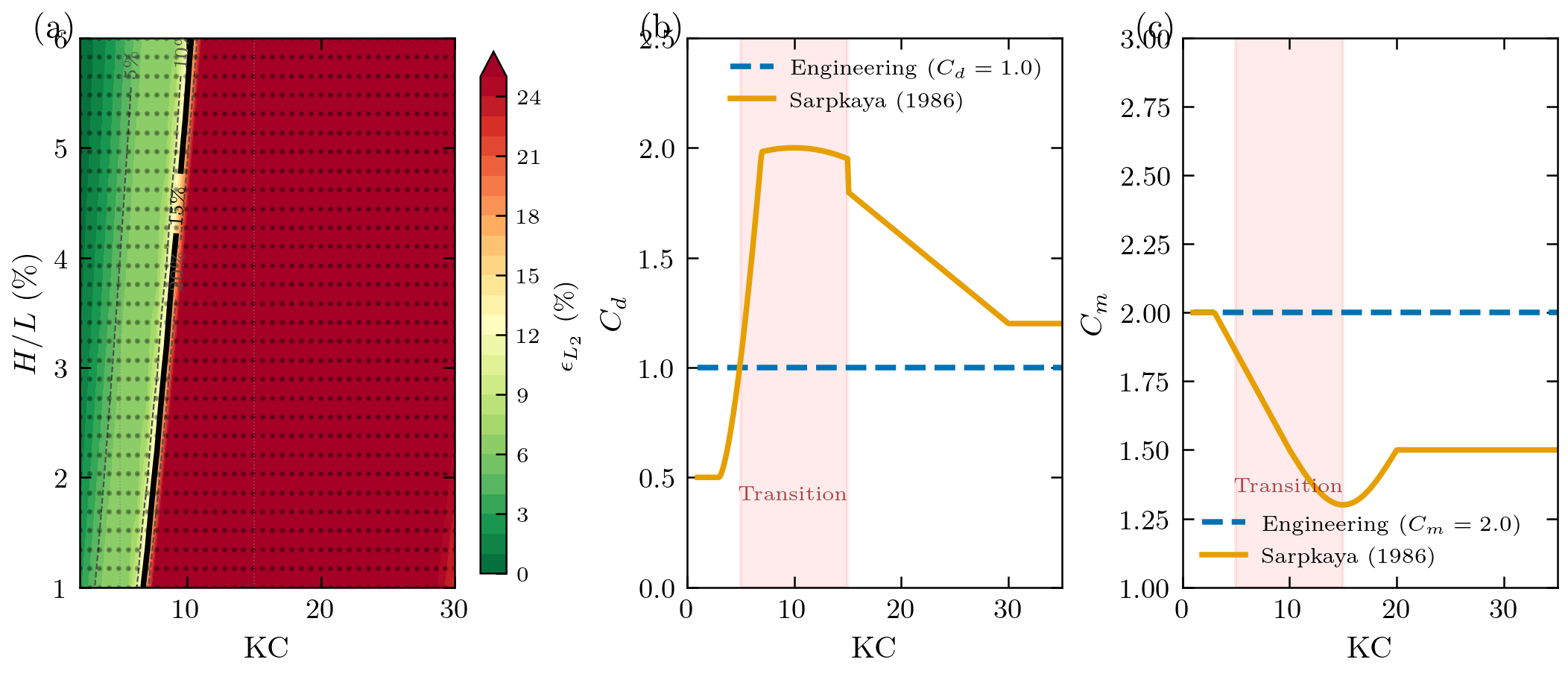
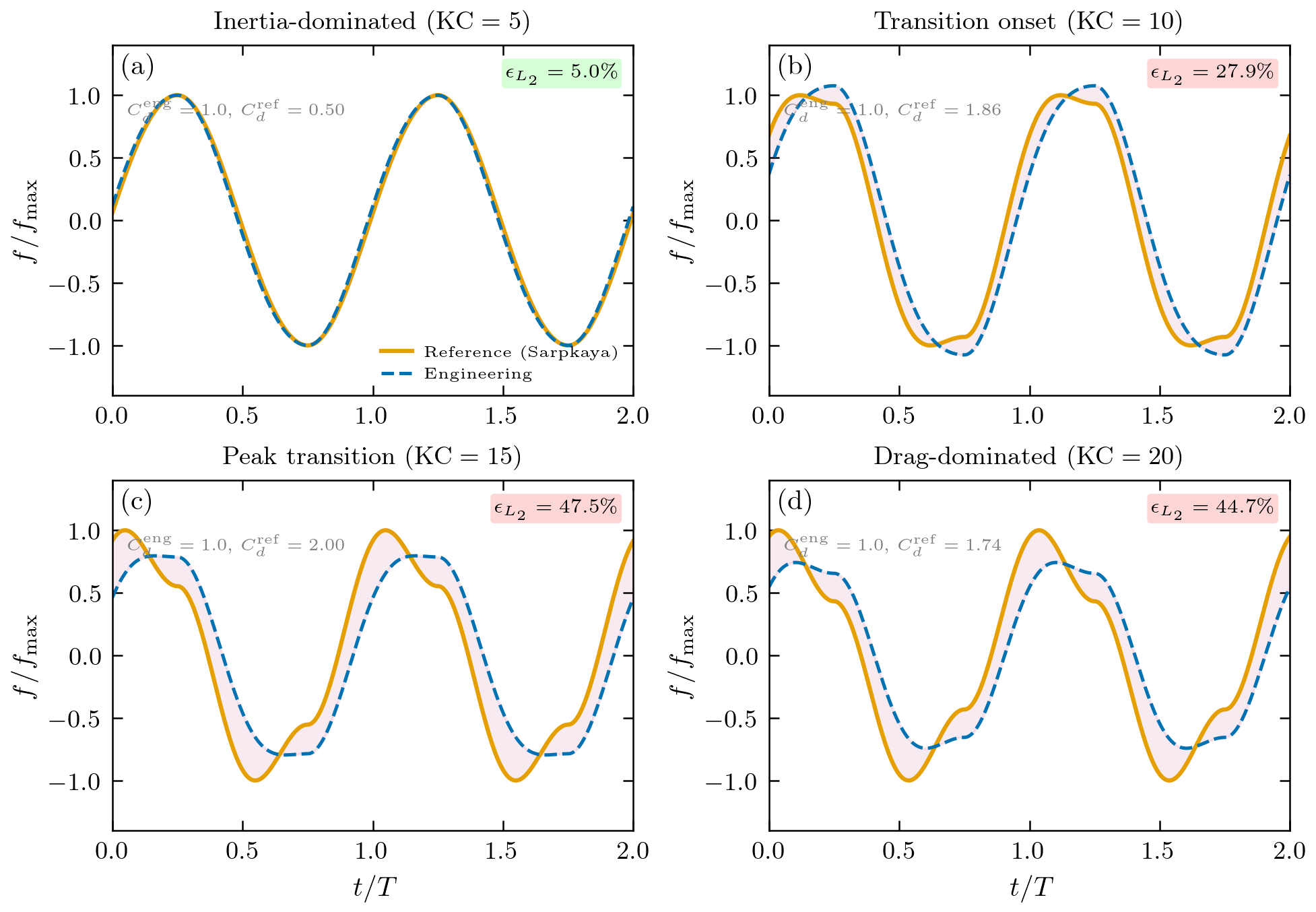
Mid-fidelity hydrodynamic models for floating offshore wind turbines rely on fixed Morison coefficients that do not capture nonlinear force variation across flow regimes. We present a diagnostic and correction framework that evaluates physics-based fidelity indicators — the Keulegan-Carpenter number, wave steepness, and relative motion amplitude — at each structural member and time step. Applied to the DeepCwind semi-submersible, the framework reveals that targeted corrections reduce surge in regular waves but amplify response by up to 278% in irregular seas, while unconditional correction triggers catastrophic resonant instability.
Floating offshore windHydrodynamic loadsAdaptive fidelity Keulegan-Carpenter numberMorison equationCoupled simulation

Upcoming Research

CFD Solar Energy

Wind-Sand Transport Around Desert PV Arrays

CFD modeling of aeolian sand transport around large-scale photovoltaic arrays in China's desert mega-bases. Predicting sand accumulation patterns and optimizing array layout for sandstorm protection.

CFD Applied Energy

Thermal-Hydraulic Simulation of Compressed Air Energy Storage

Multi-physics CFD coupling thermal energy storage dynamics with compressible air flow in underground caverns. Conjugate heat transfer in packed-bed and molten-salt systems for A-CAES optimization.

ML Engineering Structures

Physics-Informed AI for Dam Safety Monitoring

Hybrid data-mechanism-knowledge framework for intelligent dam safety risk diagnosis. Physics-informed neural networks for anomaly detection from sensor networks with automated early warning.

Review Renewable & Sustainable Energy Reviews

Foundation Models for Clean Energy Systems

Systematic review and application framework for deploying AI foundation models (LLMs, multimodal models) across hydropower, wind, solar, and ecological monitoring systems.

Policy Energy Policy

EU CBAM Impact on Chinese Energy Enterprises

Analysis of the EU Carbon Border Adjustment Mechanism — carbon cost gap quantification, EU-ETS vs China-ETS structural comparison, and strategic countermeasures for state-owned enterprises.

Policy Energy Policy

China's Role in Global Clean Energy Transition

Quantifying China's contribution to global decarbonization through renewable capacity deployment, clean energy technology export, and green investment via Belt and Road cooperation.

About

I am a PhD researcher in the Department of Engineering Science at the University of Oxford, supervised by Professor Budimir Rosic. My research sits at the intersection of computational fluid dynamics, machine learning, and structural mechanics — applied to energy systems ranging from hydropower turbines to floating offshore wind platforms and electricity grids.

My work focuses on developing physics-informed computational frameworks that bridge multiple scales and fidelities: from vortex-resolved flow simulations in turbine draft tubes, to adaptive hydrodynamic load models for offshore structures, to ensemble machine learning for grid-scale demand forecasting.

CFDMachine LearningFluid-Structure Interaction PythonOpenFOAMXGBoost / PyTorch Finite Element AnalysisHydrodynamicsLaTeX

Contact

jianou.jiang@eng.ox.ac.uk